

In today’s rapidly changing world, the only constant is change itself. The global order and the work environment have become increasingly characterized by Volatility, Uncertainty, Complexity, and Ambiguity (VUCA). These four elements shape the landscape in which Environment, Health, and Safety (EHS) professionals operate. To be effective in ensuring the safety and well-being of employees and the environment, EHS professionals need to not only understand VUCA but also develop strategies to navigate it.
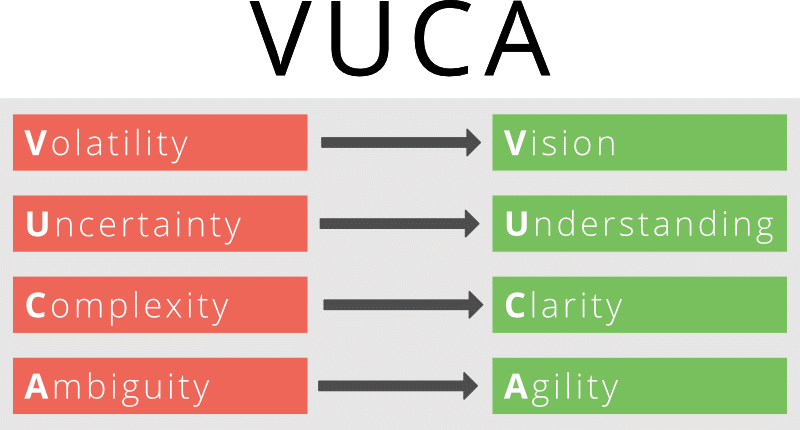
Understanding VUCA:
- Volatility: The world is in a constant state of flux. Economic, political, and environmental conditions can change suddenly, leading to increased risks. EHS professionals must anticipate and prepare for unexpected events that could impact safety.
- Uncertainty: In a VUCA world, predicting outcomes becomes challenging. Traditional risk assessments may no longer suffice, as the future is often unclear. EHS professionals need to embrace uncertainty and develop adaptive risk management strategies.
- Complexity: The interplay of various factors in the modern work environment has grown increasingly complex. Technology, globalization, and regulations all interact in intricate ways. EHS professionals must have a deep understanding of this complexity to identify potential safety hazards.
- Ambiguity: Ambiguity arises when there is a lack of clarity or understanding regarding an issue. In a VUCA world, EHS professionals may need to make decisions based on incomplete or contradictory information. This necessitates a flexible and agile approach.
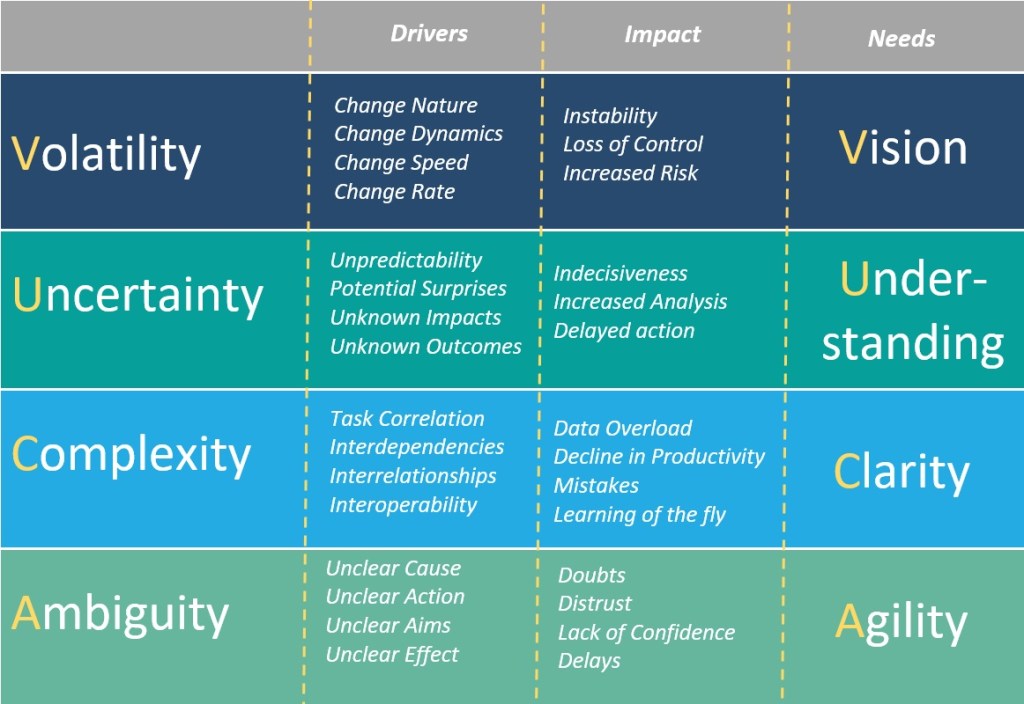
Understanding VUCA (Volatility, Uncertainty, Complexity, Ambiguity) is of paramount importance for organizations and EHS (Environment, Health, and Safety) professionals for several compelling reasons:
- Anticipating and Preparing for Change:
- In a VUCA world, change is constant and often unpredictable. By understanding VUCA, organizations and EHS professionals can anticipate potential disruptions, prepare for them, and implement strategies to minimize their impact.
- Enhancing Risk Management:
- VUCA environments are rife with risks. EHS professionals need to be adept at identifying and managing these risks to ensure the safety and well-being of employees and the environment. Understanding VUCA helps them proactively address emerging safety and environmental threats.
- Improving Resilience:
- Resilience is the ability to bounce back from setbacks and adapt to changing circumstances. Organizations and EHS professionals who understand VUCA can work on building resilience into their operations and safety protocols, enabling them to withstand unexpected challenges.
- Strategic Decision-Making:
- VUCA requires a more flexible and adaptive approach to decision-making. Organizations and EHS professionals must make strategic choices that consider multiple scenarios and outcomes. Understanding VUCA helps them make informed decisions in the face of uncertainty.
- Employee Safety and Well-Being:
- EHS professionals play a vital role in ensuring the safety and well-being of employees. Understanding VUCA helps them anticipate and mitigate workplace hazards, which is crucial in a constantly changing environment.
- Environmental Stewardship:
- Environmental regulations and concerns are subject to VUCA conditions, with issues such as climate change and resource scarcity being complex and ambiguous. EHS professionals need to be well-versed in these matters to address environmental challenges effectively.
- Competitive Advantage:
- Organizations that can navigate VUCA successfully can gain a competitive advantage. They can identify opportunities in rapidly changing markets, adapt to customer demands, and stay ahead of competitors.
- Innovation and Adaptation:
- Innovation and adaptability are key to thriving in VUCA conditions. Organizations and EHS professionals who understand VUCA can foster a culture of innovation, encouraging the development of new safety practices and environmental solutions.
- Regulatory Compliance:
- Regulations can change frequently in VUCA environments, impacting EHS compliance. Understanding VUCA helps organizations and EHS professionals stay on top of evolving regulations and make necessary adjustments.
- Sustainability and Responsibility:
- In a VUCA world, responsible environmental practices and sustainability are increasingly essential. Organizations and EHS professionals need to understand the complexity of sustainability challenges and work towards responsible solutions.
In summary, understanding VUCA is crucial for organizations and EHS professionals to thrive, adapt, and manage risks in an ever-changing world. It enables them to make informed decisions, enhance resilience, ensure the safety of employees, protect the environment, and maintain a competitive edge in the market. By acknowledging the existence of VUCA and developing strategies to navigate it, organizations and EHS professionals can better prepare for the uncertainties of the modern business and environmental landscape.
Tackling VUCA (Volatility, Uncertainty, Complexity, Ambiguity) from an EHS (Environment, Health, and Safety) standpoint comes with both resistance and benefits, which are important to consider:
Resistance to Tackling VUCA:
- Resource Constraints: Implementing strategies to address VUCA requires time, money, and human resources. Some organizations may resist change due to concerns about additional costs and resource allocation.
- Change Aversion: Change can be met with resistance, especially in well-established organizations. Employees and stakeholders may be hesitant to adopt new safety and environmental practices, preferring the status quo.
- Lack of Awareness: Some individuals within an organization may not fully understand the concept of VUCA or the need to address it, leading to resistance to change.
- Short-Term Focus: In a VUCA environment, long-term planning is crucial, but some organizations may prioritize short-term gains, which can hinder the adoption of forward-looking EHS strategies.
- Regulatory Compliance Challenges: Changing regulations and compliance requirements in VUCA conditions can pose challenges. Organizations may resist adapting to new or evolving regulations due to the associated complexities.
Benefits of Tackling VUCA from EHS Standpoint:
- Enhanced Safety: Proactive risk assessment and preparedness help prevent accidents and injuries in the workplace, ensuring the safety and well-being of employees.
- Environmental Protection: Addressing VUCA from an EHS perspective leads to better environmental stewardship. It helps organizations reduce their environmental footprint and meet sustainability goals.
- Business Continuity: Organizations that tackle VUCA effectively are better equipped to withstand disruptions, ensuring business continuity even in challenging circumstances.
- Cost Savings: Effective EHS strategies can lead to cost savings in the long run by reducing accidents, insurance premiums, regulatory fines, and environmental remediation costs.
- Resilience: Tackling VUCA fosters organizational resilience, enabling companies to adapt and thrive in uncertain conditions.
- Competitive Advantage: Companies that embrace VUCA can gain a competitive edge by being more agile, innovative, and responsive to market changes.
- Stakeholder Trust: Demonstrating a commitment to EHS in a VUCA world can build trust with stakeholders, including employees, customers, investors, and regulatory authorities.
- Sustainability and Responsibility: Addressing VUCA from an EHS standpoint aligns with corporate responsibility and sustainability goals, which are increasingly important in today’s world.
- Innovation: The necessity to adapt to VUCA conditions often fosters innovation in EHS practices, leading to the development of new and more effective safety and environmental solutions.
- Long-Term Viability: Tackling VUCA helps organizations plan for the long term, ensuring their continued viability and relevance in a changing world.
EHS (Environment, Health, and Safety) professionals can leverage various tools and enablers to navigate the challenges posed by a VUCA (Volatility, Uncertainty, Complexity, Ambiguity) environment and make improvements in the workplace. Here are some key tools and strategies:
- EHS Software Solutions: Implement comprehensive EHS software platforms that offer features like incident reporting, risk assessment, compliance management, and safety training. These platforms streamline EHS data collection, analysis, and reporting, helping organizations respond to VUCA conditions more effectively.
- IoT and Sensor Technology: Use Internet of Things (IoT) devices and sensors to monitor workplace conditions in real-time. These technologies can provide data on air quality, temperature, equipment performance, and more, allowing EHS professionals to detect and respond to issues promptly.
- Advanced Analytics and Data Visualization: Utilize data analytics tools that can process large datasets and identify trends, patterns, and anomalies. Data visualization tools like Tableau or Power BI help EHS professionals create interactive reports and dashboards for better decision-making.
- Predictive Modeling: Develop predictive models to forecast safety incidents or environmental issues. These models can be based on historical data and real-time inputs, helping EHS professionals anticipate and prevent problems.
- Digital Twins: Implement digital twin technology to create virtual replicas of the workplace and its processes. Digital twins allow for simulation, testing, and risk assessment before implementing changes in the physical environment.
- Supply Chain Monitoring Tools: In VUCA conditions, it’s crucial to monitor the supply chain. Tools that provide visibility into suppliers’ operations, transportation routes, and inventory levels can help EHS professionals anticipate disruptions.
- Regulatory Compliance Software: Keep up with evolving regulations by using compliance management software. These tools help organizations track and adhere to changing EHS regulations and ensure compliance in a VUCA world.
- Emergency Response Planning Software: Equip your organization with emergency response planning software that aids in the development and execution of crisis management plans. These tools are crucial for responding to unforeseen events effectively.
- Collaboration and Communication Platforms: Invest in collaborative tools that facilitate communication and knowledge sharing among EHS professionals, employees, and stakeholders. Effective collaboration is essential in a VUCA environment.
- Remote Monitoring Solutions: In situations where remote work or monitoring is necessary, implement solutions for EHS / health-related consultations and remote monitoring tools for EHS checks.
- Environmental Impact Assessment Tools: Use specialized tools for assessing the environmental impact of your operations. These tools can help identify potential risks and sustainability opportunities.
- Safety Culture Assessment Surveys: Conduct regular safety culture assessments using survey tools to gauge employee perceptions of safety and identify areas for improvement.
- Scenario Planning Software: Scenario planning tools allow organizations to create and analyze various future scenarios, helping EHS professionals prepare for a range of potential disruptions.
- Mobile Apps: Equip EHS professionals and employees with mobile apps for reporting safety incidents, accessing safety protocols, and receiving alerts in real-time.
- Environmental Monitoring Equipment: Deploy environmental monitoring equipment for tracking air and water quality, emissions, and other environmental factors.
These tools and strategies empower EHS professionals to proactively address VUCA challenges, improve workplace safety, and ensure environmental sustainability. The combination of technology and data-driven decision-making is essential for navigating the complexities of the modern work environment.
In conclusion, while there may be resistance to addressing VUCA from an EHS perspective, the benefits far outweigh the challenges. Proactive EHS measures not only protect employees, the environment, and the community but also contribute to an organization’s resilience, competitiveness, and sustainability. It’s essential for organizations to recognize the importance of embracing VUCA and the positive impact it can have on their EHS efforts and overall success.
Karthik
1st November 2023, Bangalore.

 Health, Environment, Safety, Sustainability (HESS)