


POST #114.
Outline:-
A Business Continuity Plan (BCP) is a component of Business continuity management (BCM)and is a crucial framework that organizations develop to ensure they can continue their essential operations in the face of various disruptions or disasters. This plan is essential for safeguarding not only the company’s financial stability but also the safety and well-being of its employees.
In the context of the Environment, Health, and Safety (EHS) domain, BCP plays a vital role in several ways:
- Emergency Response: A BCP includes provisions for immediate response during environmental emergencies, such as chemical spills or natural disasters. It outlines the steps to be taken to mitigate harm to the environment and ensure the safety of employees and the community.
- Risk Assessment: EHS professionals are involved in risk assessment, and their insights are valuable for identifying potential risks that could disrupt business operations. BCP takes these risks into account and plans for contingencies.
- Workplace Safety: Ensuring the safety of employees is a core aspect of EHS. BCP addresses employee safety during crises, whether it’s a workplace accident or a broader incident, and provides guidance on evacuation, communication, and medical support.
- Environmental Impact: In the EHS domain, you’re well aware of the importance of minimizing the environmental impact of business operations. A BCP considers how to minimize harm to the environment during a crisis and may involve plans for containment and cleanup.
- Regulatory Compliance: EHS regulations and compliance often play a significant role in continuity planning. Ensuring that the business remains compliant even during a crisis is critical, and the BCP addresses this.
- Stakeholder Communication: BCP also deals with communication strategies. EHS professionals can contribute by ensuring that communication with various stakeholders, including the public, is transparent and addresses safety and environmental concerns.
In summary, Business Continuity Planning is closely tied to EHS because it encompasses measures to protect both the business’s operational integrity and the safety of people and the environment.
Emergency Response plan is different from Business Continuity plan. (Contrast in a larger sense) Let us see how?
Emergency Response Plans (ERPs) and Business Continuity Plans (BCPs) are distinct but interconnected components of an organization’s preparedness for various situations. Here’s how you can contrast them:
Emergency Response Plan (ERP):
- Scope: ERPs primarily focus on immediate, short-term responses to specific incidents or emergencies. They address the initial response to mitigate risks and protect life, property, and the environment.
- Timeframe: ERPs deal with the immediate minutes, hours, and days following an incident. They are about addressing the crisis as it unfolds.
- Objective: The primary goal of an ERP is to ensure the safety of individuals, prevent harm, and control the immediate impact of an incident. It’s about reacting to the situation as it happens.
- Components: ERPs typically include procedures for evacuations, first aid, fire response, spill containment, and other immediate actions. They detail who does what during an emergency.
- Key Players: During an emergency, the focus is on first responders, safety personnel, and those directly involved in the incident.
Business Continuity Plan (BCP):
- Scope: BCPs are broader in scope and encompass the organization’s entire business operations. They deal with maintaining essential functions and services during and after an incident.
- Timeframe: BCPs have a more extended timeframe, ranging from days to weeks or even longer. They address how the organization continues its critical functions over time.
- Objective: The primary goal of a BCP is to ensure the organization’s resilience and continuity of critical operations. It’s about planning for the aftermath of the initial emergency and how to return to normalcy.
- Components: BCPs include strategies for data backup, alternate work locations, supply chain management, communication with stakeholders, and financial contingencies. They detail how the organization remains operational despite disruptions.
- Key Players: In a BCP, the focus shifts to managers, executives, and various teams responsible for ensuring business continuity. It involves a more comprehensive and coordinated effort across the organization.
In summary, ERPs are designed for immediate, on-the-ground responses to specific incidents to protect life and property. BCPs, on the other hand, are about maintaining the organization’s essential functions and services in the face of a broader range of disruptions. While they have different scopes and timeframes, both ERPs and BCPs play vital roles in ensuring an organization’s resilience and preparedness. They should complement each other within an organization’s overall emergency preparedness framework.
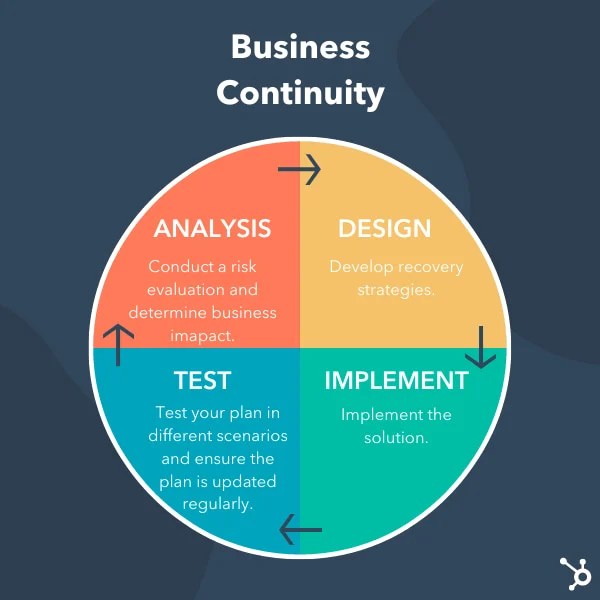
Business Impact Analysis Vs Risk Assessment (Similarity and Divergence)
Business Impact Analysis (BIA) is related to risk assessment but serves a different purpose. Lets try to understand what BIA is and how it differs from risk assessment:
Business Impact Analysis (BIA):
- Purpose: BIA is a structured process used to identify and evaluate the potential impacts that disruptive events or incidents can have on an organization’s operations, processes, and functions. The main goal is to assess the consequences of such events.
- Focus: BIA primarily focuses on understanding the criticality of various business processes and functions, as well as the dependencies between them. It aims to identify how the organization’s core functions are interconnected and what the repercussions would be if one or more of them were disrupted.
- Components: BIA typically involves identifying critical business functions, determining the maximum allowable downtime (Recovery Time Objectives or RTOs), quantifying financial and operational impacts, and understanding resource requirements for recovery.
- Output: The output of a BIA is a set of prioritized business functions, their recovery requirements, and an assessment of the potential financial and operational losses if these functions are disrupted.
Risk Assessment:
- Purpose: Risk assessment is the process of identifying, analyzing, and evaluating potential risks and threats that an organization might face. The main goal is to understand the likelihood and impact of these risks.
- Focus: Risk assessment looks at a wide range of risks, including those that could lead to business disruptions. These risks encompass financial, operational, reputational, and safety concerns. It is a comprehensive analysis that may not specifically focus on individual business functions.
- Components: Risk assessment involves identifying risks, analyzing their likelihood and impact, and often categorizing them based on various criteria such as severity and likelihood. It may also include risk mitigation strategies.
- Output: The output of a risk assessment is a prioritized list of risks, often presented in a risk matrix, showing the severity and likelihood of each risk. It helps organizations make informed decisions about which risks to address and how to manage them.
Key Differences:
- Scope: BIA is more focused on specific business functions and their criticality, while risk assessment is broader and encompasses a wide range of risks, not limited to business functions.
- Purpose: BIA aims to determine the potential impact of disruptions on business functions, helping prioritize recovery efforts. Risk assessment, on the other hand, helps organizations understand and manage risks in a broader sense.
- Output: BIA provides recovery-related information for critical functions, while risk assessment provides a prioritized list of risks with severity and likelihood ratings.
In summary, while both BIA and risk assessment are essential components of an organization’s risk management and business continuity planning efforts, they serve different purposes. BIA specifically assesses the impact of disruptions on critical business functions, while risk assessment identifies and evaluates a broader range of risks affecting the organization.
When preparing Business contingency as component of Business continuity plan, What are interruptions/ risks that organisation should consider in its scenario planning?
Here’s a list of various risks and incidents that organizations should consider when planning and developing their Business Continuity Plans (BCP):
- Natural Disasters:
- Earthquakes
- Floods
- Hurricanes
- Tornadoes
- Wildfires
- Tsunamis
- Pandemics and Health Emergencies:
- Disease outbreaks (e.g., COVID-19)
- Epidemics
- Biological threats
- Technological Failures:
- IT system crashes
- Data breaches
- Power outages
- Telecommunication failures
- Supply Chain Disruptions:
- Supplier failures
- Transportation disruptions
- Raw material shortages
- Human-Related Incidents:
- Workplace accidents
- Acts of violence or terrorism
- Sabotage
- Strikes and labor disputes
- Environmental Incidents:
- Chemical spills
- Pollution incidents (Air, Water, Land contamination, Spills)
- Hazardous material incidents (Leak)
- Financial and Economic Crises:
- Market crashes
- Economic downturns
- Currency devaluations
- Political and Regulatory Changes:
- New regulations impacting operations
- Political instability (Coup, ethnic unrest)
- Trade policy changes
- Cybersecurity Threats:
- Hacking and cyberattacks
- Ransomware incidents
- Data breaches
- Social Media and Reputation Risks:
- Negative social media campaigns
- PR crises
- Online reputation damage
- Climate Change and Environmental Risks:
- Extreme weather events
- Rising sea levels
- Resource scarcity due to climate impacts
- Legal and Compliance Risks:
- Lawsuits and legal disputes
- Regulatory fines
- Compliance failures
- Operational Failures:
- Equipment failures
- Process breakdowns
- Inventory management issues
- Utility Disruptions:
- Water supply interruptions
- Gas supply interruptions
- Internet service outages
- Financial Market Volatility:
- Currency fluctuations
- Stock market volatility
- Interest rate changes
- Employee-Related Issues:
- Key employee departures
- Labor strikes
- Mass resignations
- EHS Incidents:
- Workplace accidents
- Environmental violations
- Health and safety emergencies
- Transportation Disruptions:
- Vehicle accidents
- Supply chain transportation failures
- Port closures
- Natural Resource Scarcity:
- Water scarcity
- Energy shortages
- Raw material scarcity
- Social Unrest:
- Protests and demonstrations
- Civil unrest
- Riots
This list is by no means exhaustive, but it covers a wide range of risks and incidents that organizations should consider when developing their Business Continuity Plans. The specific risks will vary depending on the industry, location, and the organization’s unique circumstances. It’s essential to conduct a comprehensive risk assessment to identify the most relevant threats and prioritize planning efforts accordingly.
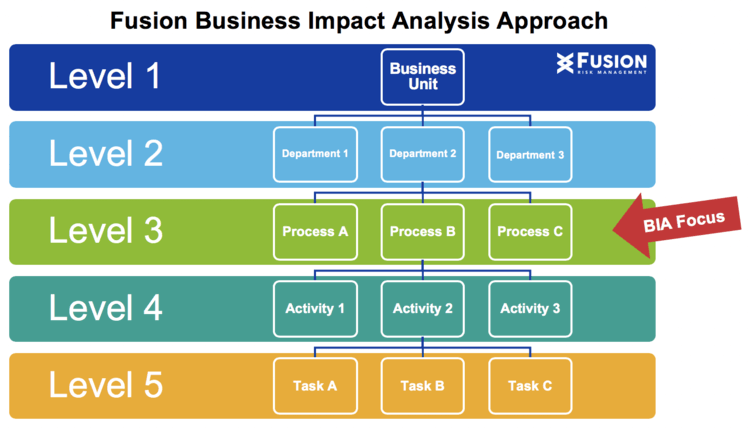
What are key components and Steps involved in execution of BCM.
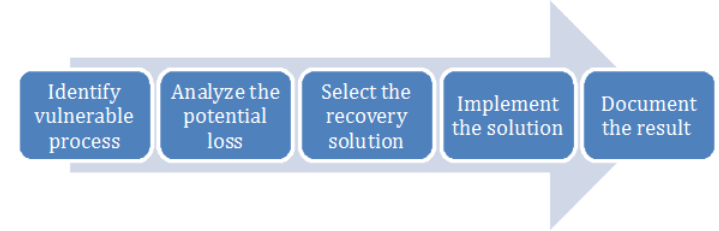
The typical sequence of events in the context of implementing Business Continuity Management (BCM), which aligns with the Incident Management and Recovery phases. Let us break down how this sequence relates to BCM:
- Incident: This is the initial event that triggers the need for Business Continuity Management. Incidents can range from minor disruptions to major crises, such as a power outage, IT system failure, natural disaster, or even a pandemic.
- Disaster: In some cases, an incident can escalate into a disaster, which is a more severe and widespread event. For example, a local server failure can escalate into a company-wide IT system collapse.
- Respond: The “Respond” phase involves taking immediate actions to address the incident or disaster. It may include activating the emergency response team, evacuating employees, and initiating damage control measures.
- Recover: Once the immediate response is in place, the focus shifts to recovery. This phase aims to restore critical business functions to a minimal acceptable level. EHS professionals play a role in ensuring the safety of employees during this phase, and their insights help prioritize recovery efforts.
- Restore: This phase concentrates on bringing the organization back to normal operations. It involves repairing or replacing damaged infrastructure and systems, as well as addressing any environmental impacts. EHS specialists might be involved in evaluating and mitigating environmental damage.
- Resume: The final phase involves returning to normal business operations. This often includes reviewing the lessons learned from the incident or disaster to improve future BCM efforts.
In the context of Business Continuity Management, the role of EHS professionals is crucial in each of these phases. You ensure the safety of employees during incidents and disasters, help assess environmental impacts, and contribute to a smooth recovery. Your expertise in risk assessment, compliance, and emergency response is invaluable in the planning and execution of BCM.
It’s worth noting that BCM is an ongoing process. Organizations regularly review and update their plans, incorporating lessons learned from past incidents to enhance their resilience and preparedness. Your commitment to continuous learning and your dedication to safety align well with the principles of effective BCM.
Standards for Implementing BCM:
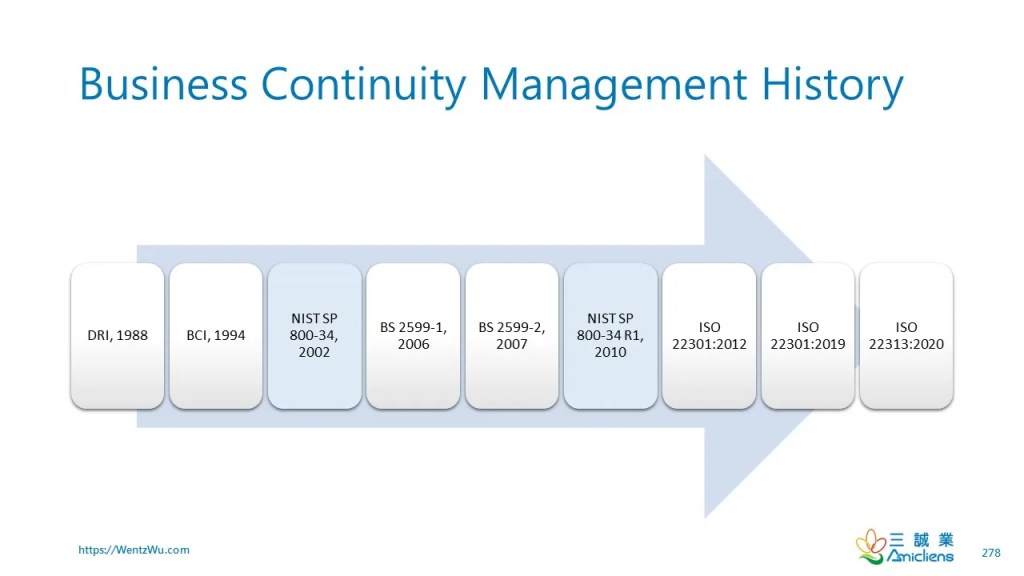
For implementing Business Continuity Management (BCM) and planning, there are several standards and guidelines available, with ISO 22301 being one of the most widely recognized. Here are the key standards and guidelines that can serve as valuable references for BCM:
- ISO 22301: Business Continuity Management Systems (BCMS): ISO 22301 is the international standard for BCM. It provides a framework for establishing, implementing, operating, monitoring, reviewing, maintaining, and continually improving a business continuity management system. ISO 22301 is the go-to standard for organizations looking to develop a comprehensive BCM program.
- ISO 22313: Business Continuity Management Systems – Guidance: ISO 22313 is a complementary standard that offers guidance on the use of ISO 22301. It provides additional information and examples to help organizations effectively implement their BCM systems.
- ISO 22317: Business Impact Analysis (BIA): ISO 22317 specifically focuses on conducting Business Impact Analysis (BIA), which is a crucial component of BCM. It offers guidance on how to identify, assess, and prioritize the critical business functions within an organization.
- ISO 22320: Emergency Management – Requirements for Incident Response: While not exclusively for BCM, ISO 22320 provides requirements for incident response. It can be valuable in developing incident response plans as part of your broader BCM efforts.
- NCEMA 7000: National Continuity Training Program: In the United States, the National Continuity Training Program provides guidance and training for federal, state, local, tribal, and territorial government personnel. It’s particularly relevant for government agencies.
BCM Implementation in IT Sector:-
Business Continuity Management (BCM) is indeed crucial for the IT sector, where the rapid recovery of IT systems and data is of utmost importance. Here’s how BCM works for the IT sector, with a focus on the recovery aspect:
- Risk Assessment: The process begins with a comprehensive risk assessment that identifies potential threats to IT systems. These threats can include hardware failures, software glitches, cyberattacks, data breaches, natural disasters, and more. The goal is to understand what could disrupt IT operations.
- Business Impact Analysis (BIA): A BIA in the IT sector is especially focused on understanding the impact of IT system disruptions on the overall business. This includes assessing the financial, operational, and reputational consequences of IT downtime.
- Recovery Time Objectives (RTOs): RTOs are defined for IT systems. These specify the maximum allowable downtime for different IT components. It’s a critical aspect of BCM for IT because it sets the expectation for how quickly IT systems must be restored.
- Backup and Data Recovery: IT-specific elements of the BCM plan include regular data backups, offsite data storage, and robust data recovery processes. This ensures that data can be quickly restored in the event of a failure.
- Redundancy and Failover Systems: Many IT organizations implement redundancy and failover systems. These provide backup mechanisms so that if one system fails, another takes over seamlessly, minimizing downtime.
- Incident Response: An IT-specific incident response plan is essential to address cyberattacks and data breaches. It includes steps to contain, eradicate, and recover from incidents, including identifying vulnerabilities that led to the breach.
- Testing and Exercising: Regular testing and exercising of recovery plans are essential for the IT sector. This ensures that recovery processes are efficient and effective. It may involve simulated disaster scenarios, penetration testing, and data recovery drills.
- Documentation and Communication: Detailed documentation of IT systems, configurations, and recovery procedures is vital. Clear communication processes should be established so that the IT team can coordinate effectively during an incident.
- Vendor and Third-Party Considerations: Many IT organizations rely on third-party vendors for critical services. BCM includes assessing the resilience of these vendors and having contingency plans in case they fail.
- Employee Training: Training IT staff is crucial to ensure they are aware of their roles and responsibilities during an incident. They should be well-versed in recovery procedures.
- Continuous Improvement: BCM in the IT sector is an ongoing process. Regular reviews and updates to the plan are essential to incorporate lessons learned from past incidents and changes in technology.
In summary, BCM in the IT sector is highly focused on rapid recovery and minimizing downtime. It involves a combination of risk assessment, planning, technology redundancy, data backup, and incident response measures to ensure that IT systems can be restored quickly in the event of various disruptions. This is vital for maintaining business operations and protecting critical data in the fast-paced, technology-dependent world of IT
BCM fitment for Non IT organisations to make it a value add?
Business Continuity Management (BCM) encompasses a broader framework for managing an organization’s resilience in the face of various disruptions. A Business Continuity Plan (BCP) is a specific component of BCM, and it’s designed to address the recovery and continuity of critical business functions in the event of disruptions, which can include but are not limited to IT-related issues. BCM, including BCP, is highly relevant to the EHS domain and is not limited to the IT sector.
Here’s how BCM and BCP fit well with the EHS domain, excluding the non-IT sector in general:
- Operational Resilience: BCM, including BCP, is essential for maintaining operational resilience. In the EHS domain, operational continuity is critical for ensuring the safety of employees and the environment. It’s not just about IT systems but also about the uninterrupted operation of critical safety processes and compliance with EHS regulations.
- Safety and Environmental Impact: BCM helps organizations plan for and respond to incidents that may have safety and environmental implications. EHS professionals play a crucial role in assessing and addressing these impacts, and BCP provides the framework for doing so effectively.
- Supply Chain and Resource Management: The EHS domain often involves managing resources and supply chains, which are critical to the continuity of operations. BCM and BCP address how to manage these aspects during disruptions, ensuring that resources needed for safety and environmental protection are available.
- Regulatory Compliance: EHS compliance is a legal requirement in many industries. BCM and BCP consider how to maintain compliance during disruptions and recover effectively, ensuring that organizations do not violate environmental and safety regulations.
- Environmental Incidents: In the event of environmental incidents like chemical spills, fires, or natural disasters, BCP outlines how to respond and recover while minimizing harm to the environment. EHS professionals are essential in this context.
- Employee Safety: BCM and BCP place a strong emphasis on employee safety, and EHS professionals are experts in this area. They contribute to ensuring that employees remain safe during and after disruptions.
- Risk Assessment: Both BCM and EHS involve risk assessment. EHS professionals often identify risks related to safety and the environment, which can feed into the overall risk assessment for BCM.
In summary, BCM, including BCP, is a critical framework for managing operational continuity and safety, making it highly relevant to the EHS domain. While it is not exclusive to the IT sector, it addresses a wide range of disruptions and is adaptable to the specific needs of organizations, including those in the non-IT sector, to ensure they can continue their essential functions while upholding safety and environmental standards.
Conclusion:-
Business Continuity Management (BCM) is more relevant than ever in uncertain times for several reasons:
- Complex Threat Landscape: The world is facing a growing range of complex threats, from pandemics to cyberattacks and climate-related disasters. BCM helps organizations prepare for and respond to these threats.
- Global Supply Chain Disruptions: In an interconnected world, supply chains can be disrupted by various factors. BCM helps organizations identify vulnerabilities in their supply chain and develop contingency plans.
- Increased Regulatory Requirements: Many industries face stricter regulatory requirements for disaster preparedness and recovery. BCM ensures that organizations remain compliant with these regulations.
- Economic Impact: Disruptions can have severe economic consequences. BCM helps organizations protect their financial stability by planning for resilience.
In these uncertain times, BCM is a proactive approach to protect an organization’s continuity and resilience. EHS personnel (As given in opening outline the need for EHS linkage) bring their expertise in safety, health, and environmental concerns to the table, making them invaluable contributors to the development and execution of BCM plans that safeguard both employees and the organization’s environmental responsibilities.
B Karthik
3rd November 2023.
Images Courtesy WWW. Owership copyright.
Inputs validated by Reyaz Ahmad, Manager-BCM. (My colleague at Honeywell).

 Health, Environment, Safety, Sustainability (HESS)