

#180

Note: I have not covered this critical topic at all. Wonder why? Here we go!!
Introduction:-
What is a Noise Hazard? A noise hazard in the workplace refers to excessive or prolonged exposure to high levels of noise that can potentially harm employees’ health and safety. It encompasses any loud or unwanted sound that interferes with normal activities, communication, or causes discomfort. Noise hazards are prevalent across a wide range of industries, from manufacturing and construction to transportation and entertainment venues.
Prevalence and Significance in Various Industries: Noise hazards are not confined to specific sectors; they permeate various industries, affecting millions of workers worldwide. In manufacturing plants, the roar of machinery and equipment can reach harmful levels, while construction sites echo with the sounds of power tools and heavy equipment. Transportation industries, including aviation, railways, and shipping, expose workers to continuous noise from engines and vehicles. Even office environments aren’t immune, with the hum of computers, printers, and HVAC systems contributing to noise pollution.
The significance of noise hazards extends beyond immediate health concerns. Prolonged exposure to high noise levels can lead to irreversible hearing damage, such as noise-induced hearing loss (NIHL), which affects millions of workers globally. Moreover, noise-induced stress and fatigue can impair concentration, decrease productivity, and increase the risk of accidents and injuries in the workplace. In industries where communication and situational awareness are critical, such as emergency services and healthcare, noise hazards can compromise decision-making and response times, jeopardizing both employee safety and public welfare.
Importance of Addressing Noise Hazards: Addressing noise hazards is not only crucial for safeguarding employee well-being but also for ensuring regulatory compliance and organizational sustainability. Governments and regulatory bodies worldwide have established standards and guidelines to limit occupational noise exposure and protect workers’ hearing health. Non-compliance with these regulations can result in legal liabilities, fines, and reputational damage for businesses.
Moreover, prioritizing noise hazard management demonstrates a commitment to employee welfare and fosters a positive organizational culture centered on health and safety. By implementing effective noise control measures, employers can enhance employee satisfaction, morale, and retention while reducing absenteeism and healthcare costs associated with noise-related health issues.
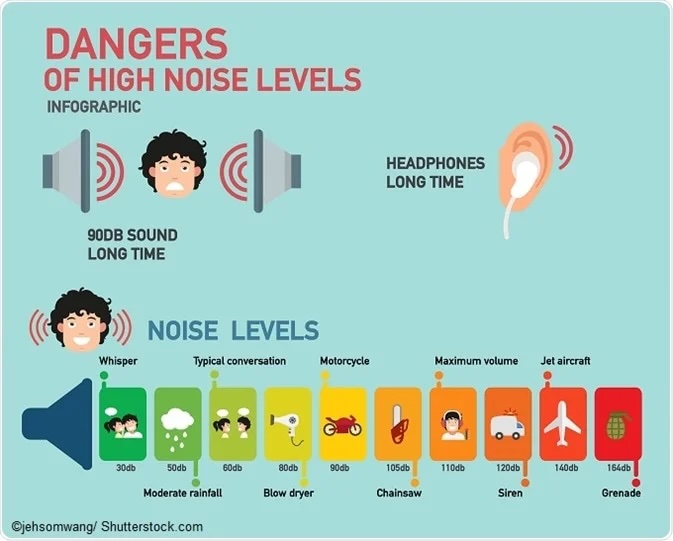
Noise and Effects:- Let’s delve into understanding noise and its effects, with examples where needed:

1. What is Noise and How it’s Measured: Noise is any unwanted or unpleasant sound that can be disruptive or harmful to human health and well-being. It’s typically measured in units called decibels (dB), which quantify the intensity or loudness of sound. For context:
- A whisper is around 30 dB.
- Normal conversation ranges from 60 to 70 dB.
- Heavy traffic may reach 85 dB.
- A jackhammer can produce noise levels of up to 120 dB or higher.
Example: Imagine a manufacturing facility where heavy machinery operates at 100 dB, exceeding safe noise exposure limits. Workers in this environment are at risk of noise-induced hearing loss if proper precautions are not taken.
2. Different Types of Noise:
- Continuous Noise: Persistent noise that remains relatively constant over time, such as the hum of machinery in a factory or the drone of air conditioning units in an office.
- Intermittent Noise: Noise that occurs sporadically with periods of quiet in between, like the clatter of tools in a construction site or the ringing of telephones in a call center.
- Impulsive Noise: Sudden, sharp sounds with high intensity and short duration, such as the blast of a firearm or the bang of a door slamming shut.
Example: Consider a construction site where intermittent noise from equipment operation is punctuated by impulsive noise from demolition work. Workers in this environment are exposed to a combination of continuous, intermittent, and impulsive noise, increasing the complexity of noise hazard management.
3. Physiological and Psychological Effects of Noise Exposure:
- Hearing Loss: Prolonged exposure to high noise levels can damage the delicate structures of the inner ear, leading to noise-induced hearing loss (NIHL). This can manifest as temporary or permanent hearing impairment, affecting communication and quality of life.
- Stress: Chronic exposure to noise can trigger physiological stress responses, including elevated heart rate, increased blood pressure, and heightened levels of stress hormones like cortisol. This can contribute to fatigue, anxiety, and burnout among workers.
- Decreased Productivity: Noise pollution in the workplace can impair concentration, disrupt cognitive function, and hinder task performance. It can also interfere with communication and collaboration, leading to errors, inefficiencies, and decreased productivity.
Example: In an open-plan office environment where noise levels exceed recommended limits, employees may experience difficulty concentrating on their tasks due to distractions from nearby conversations, phone calls, or office equipment. This can result in reduced productivity and job satisfaction among workers.
By understanding the different types of noise and their effects on workers’ health and well-being, employers can implement appropriate measures to mitigate noise hazards and create a safer, more conducive work environment.
Let’s elaborate on regulatory standards and guidelines regarding noise exposure limits, including Indian noise regulations:
1. International and Regional Regulations:
- OSHA (Occupational Safety and Health Administration): OSHA, the primary regulatory body for occupational safety in the United States, sets forth standards to protect workers from noise hazards. The permissible exposure limit (PEL) for occupational noise exposure is 90 decibels (dB) averaged over an 8-hour workday, known as the 8-hour time-weighted average (TWA).
- EU Directives: The European Union has established directives aimed at protecting workers from noise exposure. The EU’s Noise at Work Directive (2003/10/EC) mandates that employers assess and mitigate risks associated with noise exposure in the workplace. It sets a lower exposure action value (LAV) of 80 dB(A) and an upper exposure action value (UAV) of 85 dB(A) for an 8-hour TWA, beyond which employers must take measures to reduce noise levels and provide hearing protection to workers.
- Indian Noise Regulations: In India, the Central Pollution Control Board (CPCB) is responsible for formulating and enforcing regulations related to environmental pollution, including noise pollution. The Noise Pollution (Regulation and Control) Rules, 2000, under the Environment (Protection) Act, 1986, prescribe permissible noise levels in different zones (industrial, commercial, residential, and silence zones) during different time periods (daytime and nighttime). For example, the daytime noise limit for industrial areas is 75 dB(A), while the nighttime limit is 70 dB(A). These regulations aim to prevent and control noise pollution to safeguard public health and the environment. The Indian factories act sets workplace noise level at 8hrs as 90 db(A) at TWA.
2. Importance of Compliance: Compliance with noise exposure standards and guidelines is critical for ensuring a safe and healthy working environment for employees. Here’s why it’s important:
- Protecting Workers’ Health: Occupational noise exposure can lead to irreversible hearing damage, stress-related health issues, and decreased productivity among workers. Complying with noise exposure limits helps minimize these risks and protects workers’ health and well-being.
- Legal Requirements: Non-compliance with noise regulations can result in legal liabilities, penalties, and fines for employers. By adhering to regulatory standards, businesses demonstrate their commitment to upholding health and safety laws and avoid potential legal consequences.
- Enhancing Organizational Reputation: Prioritizing employee health and safety through compliance with noise regulations fosters a positive organizational image and reputation. It instills confidence among employees, stakeholders, and the community, contributing to a culture of trust, accountability, and corporate responsibility.
- Improving Productivity and Efficiency: By implementing noise control measures and providing appropriate personal protective equipment (PPE), employers can create a conducive work environment that promotes productivity, concentration, and job satisfaction. Compliance with noise standards can thus positively impact employee performance and organizational efficiency.
Noise Health Hazard:– Let’s delve deeper into noise hazards, their health effects, long-term implications, and the intricate mechanism of hearing in human beings, including the anatomy of the ear:
1. Noise Hazard and Health Effects:
- Immediate Effects: Exposure to high levels of noise can cause temporary hearing impairment or tinnitus (ringing in the ears), which may subside after a period of rest. Additionally, noise can induce stress responses, leading to increased heart rate, elevated blood pressure, and feelings of anxiety or irritability.
- Long-Term Effects: Prolonged exposure to excessive noise levels can result in permanent hearing damage, known as noise-induced hearing loss (NIHL). NIHL typically develops gradually over time and is often irreversible. It can affect both the ability to hear sounds and understand speech, impacting communication, social interactions, and quality of life. Noise Induced Hearing loss is an occupational Illness that need to be reported to authorities in India.
2. Impact of Noise Exposure on Health in the Long Term:
- Noise-Induced Hearing Loss (NIHL): Continuous or repeated exposure to loud noise can damage the delicate hair cells in the inner ear (cochlea), leading to sensorineural hearing loss. NIHL typically affects high-frequency sounds first and may progress to encompass lower frequencies over time. The extent of hearing loss depends on factors such as the intensity and duration of noise exposure, individual susceptibility, and use of hearing protection.
- Non-Auditory Health Effects: In addition to hearing impairment, chronic noise exposure has been linked to various non-auditory health effects, including cardiovascular disorders, sleep disturbances, cognitive impairments, and mental health issues such as depression and anxiety. These effects can have profound implications for overall well-being and quality of life, both in the workplace and beyond.

3. Hearing Mechanism in Human Beings:
- Anatomy of the Ear: The human ear comprises three main parts: the outer ear, middle ear, and inner ear.
- Outer Ear: Consists of the visible portion (pinna) and the ear canal (auditory meatus), which channels sound waves to the eardrum (tympanic membrane).
- Middle Ear: Contains the ossicles (three tiny bones: malleus, incus, and stapes) that transmit vibrations from the eardrum to the cochlea.
- Inner Ear: Houses the cochlea, a spiral-shaped organ filled with fluid and lined with thousands of microscopic hair cells. These hair cells convert sound vibrations into electrical signals, which are then transmitted to the brain via the auditory nerve for interpretation.
- Hearing Process: When sound waves enter the ear, they cause the eardrum to vibrate, which in turn sets the ossicles in motion. The movement of the ossicles amplifies the vibrations and transmits them to the cochlea. Within the cochlea, hair cells detect the vibrations and convert them into neural impulses, which are transmitted to the brain’s auditory cortex for processing and perception of sound.
Understanding the complex interplay between noise exposure, health effects, and the intricate mechanism of hearing underscores the importance of proactive measures to mitigate noise hazards in the workplace and protect workers’ hearing health. By implementing effective noise control strategies and promoting awareness of noise-induced risks, employers can create safer and healthier work environments conducive to long-term well-being.
Let’s elaborate on identifying sources of noise, assessment and measurement of noise levels, and control measures, with examples where applicable:
Identifying Sources of Noise:
- Common Sources of Noise in Various Industries:
- Manufacturing Industry: Heavy machinery, conveyor belts, compressors, and pneumatic tools generate significant noise levels in manufacturing plants.
- Construction Sites: Power tools (e.g., jackhammers, drills), heavy equipment (e.g., bulldozers, excavators), and construction activities such as demolition and welding contribute to high noise levels.
- Transportation Sector: Aircraft engines, railway operations, traffic congestion, and vehicle fleets produce continuous noise pollution in airports, train stations, and urban areas.
- Office Environments: Office equipment (e.g., printers, photocopiers), HVAC systems, and open-plan layouts can generate background noise that may affect employee concentration and productivity.
- Conducting a Noise Assessment:
- Noise Monitoring: Utilize sound level meters or noise dosimeters to measure noise levels at various locations within the workplace.
- Identifying Hotspots: Identify areas with the highest noise levels and frequency of exposure, such as near machinery or along transportation routes.
- Employee Feedback: Seek input from workers to identify noise sources and assess their subjective experiences and concerns regarding noise exposure.
- Prioritization: Prioritize noise sources based on their contribution to overall noise levels, duration of exposure, and potential impact on worker health and safety.
Assessment and Measurement:
- Conducting Noise Level Measurements:
- Sound Level Meters: Use portable sound level meters to measure noise levels in decibels (dB) at specific locations within the workplace. These devices provide real-time readings and can capture both average and peak noise levels.
- Dosimetry: Employ personal noise dosimeters worn by workers to monitor individual exposure over time. Dosimeters measure cumulative noise exposure and can provide data for assessing compliance with regulatory limits and determining the need for hearing protection.
- Importance of Personal Noise Dosimeters:
- Personal noise dosimeters offer a comprehensive assessment of individual exposure to noise throughout the workday, accounting for variations in noise levels and durations across different tasks and environments.
- By quantifying personal noise exposure, dosimeters enable employers to identify high-risk activities and implement targeted interventions to reduce worker exposure and prevent noise-induced hearing loss.
- Noise Mapping Techniques:
- Sound Mapping Software: Utilize specialized software to create noise maps that visualize noise levels across the workplace or specific areas. These maps help identify zones with elevated noise levels and guide the design and placement of noise control measures.
- Grid Sampling: Divide the workplace into grids and measure noise levels at multiple points within each grid to create a spatial representation of noise distribution. This approach facilitates targeted interventions in areas with the highest noise exposure.
Control Measures:
- Engineering Controls:
- Noise Barriers: Install physical barriers or sound-absorbing materials to block or reduce noise transmission from sources to workers.
- Enclosures: Enclose noisy machinery or equipment within soundproof enclosures to contain noise emissions and prevent propagation.
- Isolation: Use vibration isolation mounts or damping materials to reduce the transmission of mechanical vibrations and associated noise.
- Administrative Controls:
- Job Rotation: Rotate workers through different tasks or locations to minimize prolonged exposure to high noise levels.
- Scheduling: Schedule noisy activities during periods when fewer workers are present or implement staggered shifts to reduce overall noise exposure.
- Personal Protective Equipment (PPE):
- Hearing Protection: Provide workers with earplugs or earmuffs to reduce the transmission of noise to the ears and protect against noise-induced hearing loss. Ensure proper fitting and usage of hearing protection devices through training and supervision. If noise level exceeds 90db(A),double hearing protection must be given. Also signages must be posted about the same.
Example:
- In a manufacturing plant, noise assessment reveals that the stamping machines consistently produce noise levels exceeding regulatory limits. To address this, engineering controls such as enclosing the machines in soundproof enclosures are implemented to reduce noise emissions. Additionally, administrative controls are introduced, including job rotation to limit workers’ exposure to noisy areas and scheduling maintenance activities during off-peak hours. Workers are provided with personal noise dosimeters to monitor their individual exposure, and hearing protection devices are distributed for use in high-noise areas.

Let’s briefly explain audiometry, noise-induced hearing losses, medical interventions, and counseling:
1. Audiometry:
- Definition: Audiometry is a diagnostic test used to evaluate an individual’s hearing ability and detect any hearing loss.
- Procedure: During an audiometry test, the individual wears headphones and listens to sounds of varying frequencies and intensities. They indicate when they hear each sound, allowing the audiologist to determine the softest sounds the person can hear at different frequencies.
- Results: The results of audiometry are plotted on an audiogram, which provides a visual representation of the individual’s hearing thresholds across different frequencies. Audiometry helps identify the type, degree, and configuration of hearing loss.
2. Noise-Induced Hearing Loss (NIHL):
- Definition: Noise-induced hearing loss (NIHL) refers to hearing impairment caused by exposure to excessive or prolonged noise levels, such as those encountered in industrial or recreational settings.
- Mechanism: Prolonged exposure to loud noise damages the delicate hair cells in the inner ear (cochlea), leading to irreversible hearing loss. NIHL typically affects high-frequency sounds first and may progress to encompass lower frequencies over time.
- Prevention: NIHL is preventable through measures such as engineering controls to reduce noise levels, personal protective equipment (e.g., earplugs, earmuffs), and noise awareness training for workers.
3. Medical Interventions:
- Treatment: There is currently no cure for noise-induced hearing loss. However, medical interventions may include hearing aids or cochlear implants to improve hearing function and communication abilities in individuals with significant hearing loss.
- Management: Medical management of NIHL focuses on preventing further progression of hearing loss, managing associated symptoms (e.g., tinnitus), and addressing any underlying medical conditions that may exacerbate hearing impairment.
4. Counseling:
- Purpose: Counseling plays a crucial role in supporting individuals with noise-induced hearing loss and helping them cope with the challenges associated with hearing impairment.
- Education: Counseling sessions provide information about hearing loss, its causes, and strategies for managing communication difficulties in various settings.
- Emotional Support: Counseling offers emotional support and encouragement to individuals experiencing the psychosocial impact of hearing loss, such as social isolation, depression, or anxiety.
- Adjustment: Counseling helps individuals adjust to living with hearing loss by exploring coping strategies, improving communication skills, and fostering resilience and acceptance.
Let’s dive into training and awareness on noise hazards, as well as monitoring and maintenance guidelines:
Training and Awareness:
- Significance of Employee Education and Training:
- Educating employees about noise hazards, their effects, and preventive measures is crucial for promoting a culture of safety and protecting hearing health in the workplace.
- By raising awareness about the risks associated with noise exposure, employees are empowered to recognize potential hazards, take proactive measures to reduce exposure, and utilize appropriate personal protective equipment (PPE).
- Tips for Creating Effective Noise Awareness Programs:
- Tailor Training to Audience: Customize training sessions to address the specific needs and job roles of employees. For example, provide targeted training for workers in high-noise areas or those operating noisy equipment.
- Use Multiple Formats: Incorporate a variety of training formats, such as presentations, interactive workshops, videos, and hands-on demonstrations, to engage employees and reinforce key concepts.
- Highlight Real-Life Examples: Share case studies, testimonials, or videos illustrating the consequences of noise-induced hearing loss and the importance of prevention.
- Encourage Participation: Foster open communication and encourage employees to share their experiences, concerns, and ideas for noise control and mitigation.
- Provide Resources: Offer educational materials, fact sheets, posters, and online resources to reinforce learning and serve as reference materials for employees.
Monitoring and Maintenance:
- Emphasizing Ongoing Monitoring and Maintenance:
- Regular monitoring and maintenance of noise control measures are essential to ensure their continued effectiveness in reducing noise exposure and protecting workers’ hearing health.
- Implementing a systematic approach to monitoring and maintenance helps identify potential issues, address deficiencies promptly, and maintain a safe working environment over time.
- Guidelines for Periodic Reassessment and Updating Control Strategies:
- Schedule Regular Assessments: Conduct periodic reassessments of noise levels and exposure patterns in the workplace to identify any changes or emerging risks.
- Utilize Objective Measures: Use sound level meters, noise dosimeters, or other objective monitoring tools to quantify noise levels accurately and track trends over time.
- Engage Stakeholders: Involve employees, safety representatives, and management in the reassessment process to gather feedback, assess the effectiveness of existing control measures, and identify areas for improvement.
- Update Control Strategies: Based on the findings of reassessments, adjust control strategies as needed, such as modifying engineering controls, revising administrative procedures, or providing additional training and resources.
- Document and Communicate Results: Document reassessment findings, actions taken, and any changes to control strategies. Communicate updates to relevant stakeholders to ensure transparency and accountability in noise management efforts.
Let’s explore some real-life Indian examples of successful noise hazard management initiatives and highlight best practices adopted by leading organizations:
1. Tata Steel:
- Initiative: Tata Steel, one of India’s leading steel manufacturers, implemented a comprehensive noise management program across its production facilities.
- Best Practices:
- Conducting Regular Noise Assessments: Tata Steel conducts periodic noise assessments using sound level meters to identify areas with elevated noise levels and prioritize control measures.
- Engineering Controls: The company has invested in state-of-the-art machinery and equipment designed to reduce noise emissions at the source, such as noise-attenuating enclosures and mufflers.
- Employee Training and Awareness: Tata Steel provides extensive training and awareness programs to employees on noise hazards, proper use of personal protective equipment (PPE), Audiometry, and strategies for minimizing noise exposure.
- Continuous Improvement: The company regularly reviews and updates its noise management strategies based on feedback from employees, technological advancements, and changes in regulatory requirements.

2. Infosys:
- Initiative: Infosys, a leading IT services company in India, has implemented innovative measures to address noise hazards in its office environments.
- Best Practices:
- Office Design: Infosys designs its office spaces with acoustic considerations in mind, incorporating sound-absorbing materials, partitions, and layout configurations to minimize noise propagation and enhance employee comfort.
- Flexible Work Policies: The company offers flexible work policies, including remote work options and flexible scheduling, to reduce overcrowding and noise levels in office spaces during peak hours.
- Technology Solutions: Infosys leverages technology solutions such as noise-canceling headphones and sound masking systems to mitigate distractions and improve concentration in open-plan office environments.
- Employee Feedback Mechanisms: The company solicits regular feedback from employees through surveys, focus groups, and suggestion boxes to identify areas for improvement and tailor noise management initiatives to employees’ needs and preferences.
3. Indian Railways:
- Initiative: Indian Railways, the national railway system of India, has implemented measures to address noise hazards associated with train operations and maintenance activities.
- Best Practices:
- Noise Reduction Measures: Indian Railways has adopted various noise reduction measures, such as retrofitting trains with noise-damping materials, optimizing locomotive engines for reduced noise emissions, and implementing quieter braking systems.
- Track Maintenance: The railway authorities conduct regular track maintenance activities to minimize noise generated by train operations, such as rail grinding and lubrication of rail joints.
- Community Engagement: Indian Railways engages with local communities residing near railway tracks to raise awareness about noise hazards, address concerns related to noise pollution, and collaborate on mitigation efforts, such as erecting noise barriers and implementing quiet zones.
Conclusion:– We’ve highlighted several key points:
- Noise hazards are prevalent across various industries, stemming from machinery, equipment, and processes, and can lead to long-term health effects such as noise-induced hearing loss and stress.
- Regulatory standards and guidelines, both international and regional, underscore the importance of compliance to ensure a safe working environment and prevent legal liabilities.
- Effective management of noise hazards involves identifying sources of noise, conducting thorough assessments, implementing control measures, and providing employee training and awareness.
- Ongoing monitoring and maintenance of noise control measures are essential to ensure their effectiveness and adaptability to changing workplace conditions.
It’s crucial to reinforce the significance of addressing noise hazards to protect worker well-being and maintain a productive work environment. Continuous improvement and proactive measures, such as regular noise assessments, employee education, and technological advancements, are vital in managing noise hazards effectively and mitigating their impact on worker health and safety. By prioritizing noise hazard management and fostering a culture of safety and awareness in the workplace, organizations can create environments conducive to employee well-being, productivity, and long-term success. Let’s continue to strive for excellence in managing noise hazards and promoting a safer and healthier work environment for all.
Karthik
11th May 2024 1300 Hrs.

 Health, Environment, Safety, Sustainability (HESS)