

Note: Today is normal day for family as we mourn the departed, so no Ganesh Chathurthi, Hence the Blog.
#209
In the world of safety, quality, and operations, the phrase “The map is not the terrain (Territory)” aptly captures the challenge of turning procedures into real-world action. Procedures and work instructions often represent an idealized version (Map) of how tasks should be done. However, operations on the shop floor often deviate from these ideal steps due to constraints, unforeseen circumstances, or practicality (Terrain). This is where the need for continual iteration, refinement, and validation of procedures comes into play.
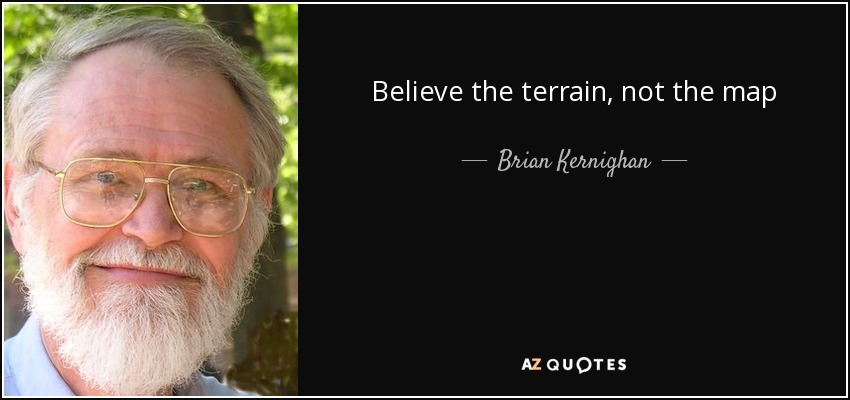
Here are a few key principles and practical strategies to ensure that the gap between what is written and what is actually done narrows over time:
1. Procedures Are Models, Not Absolutes
A procedure is essentially a model, a framework outlining the expected steps in any operation. But just like any model, it is not infallible. Its real-world application often uncovers gaps or inconsistencies that need to be addressed. For example, while a safety procedure may advise employees to don personal protective equipment (PPE) before starting a task, field constraints might make it difficult to wear specific gear during particular operations. In such cases, frontline workers will innovate and adjust based on immediate needs. This highlights the importance of constant revision and review.
2. Use Real-Time Feedback for Iterative Improvement
The best procedures evolve based on user feedback and actual operational conditions. When an operator finds a safer or more efficient way to perform a task, that insight should be captured and used to refine the procedure. Incorporating lessons learned from near misses, risk assessments, and actual incidents can make procedures more resilient. A good practice is to conduct regular procedure reviews, particularly after an incident or when a deviation from the established protocol is reported.
Take, for instance, a manufacturing facility where preventive maintenance on critical equipment was documented as requiring certain tools. An actual near miss revealed that the tools specified in the procedure weren’t available in all parts of the plant. By revising the procedure to address this, future maintenance tasks were made smoother and safer.
3. Involve Frontline Workers in the Drafting Process
Procedures should not be written in isolation by engineers or management teams. The best insights often come from the workers who perform the tasks. Involving them during the drafting phase ensures that the procedure reflects actual practices and operational challenges. It’s critical to ask them, “How do you actually perform this task?” and, “What steps do you take when things go wrong?”
For example, in a quality control setting, the operators responsible for measuring the specifications of a product might have an unspoken workaround to deal with slight variations in equipment calibration. By bringing them into the conversation, you’re likely to uncover practices that should be formalized or safety gaps that need addressing.
4. Simplify Without Compromising Safety or Quality
One major pitfall is overcomplicating procedures with technical jargon or unnecessary detail. While it’s important to be thorough, it’s equally essential that the language used in work instructions is accessible to those who will follow them. Operators should be able to easily understand the steps without needing clarification. Simplicity is key without compromising the task’s safety, quality, or operational integrity.
Consider a case in engineering preventive maintenance where the original manual listed over 50 steps to troubleshoot a specific machine issue. On review, it was discovered that many steps were redundant or could be simplified, which made the revised procedure much more user-friendly while still ensuring safety and machine longevity.
5. Balance Between Written Procedures and Dynamic Decision-Making
Work environments can be unpredictable. As much as procedures strive to cover every scenario, there will always be situations that require on-the-spot judgment. The key is not to restrict the operator with rigid instructions but to provide them with a flexible framework that leaves room for discretion while maintaining safety as a non-negotiable element.
A classic example can be found in emergency response protocols. While steps are outlined in detail for evacuations or emergency shutdowns, real-life situations rarely unfold exactly as expected. Procedures should acknowledge this unpredictability, offering operators clear guiding principles while allowing them to use judgment.
6. Risk-Based Approach to Revisions
Each procedure must undergo periodic revisions based on emerging risks and changes in operational dynamics. Incidents, both minor and major, provide valuable insights into how procedures might have failed. A risk-based approach involves using actual data from operations (near misses, incidents, and audit findings) to guide how and when a procedure should be revised.
For example, in the chemical processing industry, a near-miss during solvent handling may indicate the need to revise the procedure around spill control or PPE requirements. This would be based on a real-world understanding of the chemical’s behavior, worker responses, and the specific environmental factors in play.
7. Cross-Functional Alignment for Comprehensive Coverage
Operational procedures should not only focus on safety but must encompass quality, maintenance, and process operations. The disconnect between various departments can result in isolated instructions that lack cohesion. Quality procedures, for example, might not always take into account operational challenges. By aligning cross-functional teams—operations, safety, quality, and engineering—you ensure a holistic approach where all critical aspects are covered.
In one plant setting, a misalignment between the production team and the quality assurance department led to a drop in product quality because procedures were not aligned across functions. After bringing both teams together to review the processes, procedures were restructured to accommodate quality checks during production, minimizing rework and defects.
8. Document What is Actually Done
Finally, one of the most important steps in creating effective work instructions is documenting what is actually done, not just what is planned. Often, the reality of operations diverges from theoretical steps, and this divergence should be captured accurately. During audits or safety checks, what operators are doing should be compared to the written instructions. This allows you to identify gaps and make necessary adjustments.
For example, a process operation may document the use of a specific set of tools for a task, but in practice, the operator may use different tools due to availability or efficiency. Documenting this reality helps ensure that what is written mirrors what is done on the ground.
Conclusion: A Procedure is a Living Document
A procedure is not just a one-time document but a living, breathing tool that evolves. It’s a balance between capturing the ideal operational steps and recognizing the realities on the ground. By fostering a culture of continuous improvement, involving those on the frontline, and ensuring cross-functional alignment, we can create procedures that not only ensure compliance but drive safe, efficient, and quality operations.
In essence, perfection is achieved through constant iteration, real-world experience, and learning from failures, near misses, and risk assessments. This iterative process ensures that the map, while never the terrain, becomes an accurate guide for navigating the complexities of the workplace.
Your Comments are welcome.
Karthik
7th Sep 2024 230pm.

 Health, Environment, Safety, Sustainability (HESS)