
#213

I’m beyond disgusted. Another day, another chemical leak, another explosion, another set of lives snuffed out, leaving behind grieving families and a community shaken. This time it’s in the Bombay suburbs, but we know this isn’t an isolated incident—it’s a grim pattern playing out across India. Runaway reactions, gas leaks, vapor cloud explosions, fires—each of these incidents has led to the death of workers, and 100s more have been left injured, some of them maimed for life.
And what does this all add up to? Nothing but fleeting headlines, a few weeks of inquiry, no cause ever known, (Not formally) and the same cycle of negligence continuing until the next fatal accident. There’s no accountability, no change, no shame. Life, it seems, is just another statistic in the balance sheet of these companies, where human life is cheaper than the cost of implementing proper safety measures.

The Sickening Culture of Corporate Apathy
It makes me sick to my core to see companies—irresponsible, callous entities—putting profits over safety. Time and again, safety measures are seen as ‘too expensive,’ a hurdle in achieving quarterly targets. How utterly shameful is it that businesses would rather compensate families after a worker’s death than invest in safety protocols that could prevent these fatalities in the first place? The most tragic irony here is that these so-called safety measures, though they may seem costly upfront, would save far more in terms of production time, inquiry costs, legal battles, and the loss of human capital.
What kind of society are we when we accept this? Where are the ethics, the basic decency that should make us stand up and say, “No, this is unacceptable”?
Political Interference: Another Stain on the System
Oh, and let’s not forget the ever-present political interference. God forbid any regulatory body tries to enforce the law! Local politicians jump in to shield these companies, mouthing the same tired excuses—“They are providing jobs” or “We can’t afford to shut them down.” It’s all nonsense. When did jobs become more valuable than human lives? When did it become okay to sacrifice safety at the altar of employment?
No one dares to speak up, no officer dares to challenge these corporations because the moment they do, their careers are in jeopardy. The system is designed to protect those in power and those with deep pockets, while the workers who keep these industries running are left to die.
The Inquiry Charade: Where’s the Real Accountability?
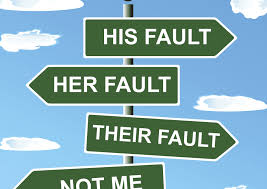
And what happens when these disasters occur? A few inquiries are opened, blame is shifted, some mid-level managers might get the axe, but the real decision-makers walk away unscathed. There is no transparency, no real consequences for those at the top. As long as the fines are small and the investigations weak, why would any company change its ways?
To make matters worse, we rarely hear about the long-term suffering of the injured—those whose lives have been shattered by these accidents. What happens to those who lose limbs, who are scarred for life? We don’t even know how many truly recover or how many are forever handicapped. They become invisible, swept under the rug as just another “cost of doing business.”
Is There Any Hope?
I wonder if there’s any hope left in this country for genuine safety reform. Can we ever break out of this cycle of death, destruction, and negligence? I want to believe that change is possible, but when incidents like these keep happening, and there is no shame, no guilt, and no accountability, what are we supposed to think?
What Needs to Change?
If there’s to be any real change, it’s going to require a complete overhaul of how we approach industrial safety in this country:
- Stricter Enforcement and Heavier Penalties: We need enforcement that actually hurts these companies where it counts—in their profits. Penalties need to be severe, not just a minor inconvenience. The political interference must stop. Regulatory bodies need to be independent, empowered, and fully capable of shutting down unsafe operations without fear of retribution. (Easily said than done).
- Community Action and Worker Rights: People can’t keep accepting these hazards as part of life. Communities and workers need to demand better conditions, better safety protocols, and real accountability from the companies that operate in their neighborhoods. Unions and worker movements have to become stronger and more vocal. (Do they have time, resource, energy to do this,in this rat race to survive amongst 1.4 Billion souls here)
- Public Shaming and Reputational Consequences: Companies must feel the sting of public outrage. When a company’s reputation takes a hit, it hits their bottom line. Public pressure can force changes where legal action might fail. If communities, media, and the public at large start holding these companies accountable through social shaming, they will have no choice but to take safety seriously. Even after 10 hrs as of now, the name of company or chemical leaked at Ambernath is unknown.
- Safety Leadership at the Top: Leaders in these organizations need to be held responsible—not just the plant managers, but the executives. There needs to be personal accountability. Safety has to become a non-negotiable business priority. We need leaders who recognize that worker safety is not just a legal requirement, but a moral one. I am not even going in to Hazardous chemical companies operating without a full time safety (EHS person) managing issues or if present only a figure head with no value add.
- Cultural Shift Within Industry: Finally, there has to be a fundamental cultural shift in how companies approach safety. Safety can’t be viewed as an ‘added cost’ or a compliance checkbox—it must become an integral part of the business. Workers should be empowered to speak up without fear of retaliation, and companies should foster a culture where safety is as important as profits.
Final Thoughts
I’m fed up with the endless excuses, the lack of action, and the sheer disregard for human life. How many more lives will be lost? How many more families will be destroyed? It’s time to wake up, for all stakeholders—companies, regulators, workers, and politicians. Safety is not negotiable. If we don’t change now, we are only waiting for the next tragedy to strike.
It’s not a question of if; it’s a question of when. And when it happens, the blood will be on all of our hands.
Karthik
Friday the 13th, (2024) 930am.
Update 11am
The leak occurred at Nikakem Products, a company that handles hydrochloric acid, phosphorus trichloride and phosphorus pentoxide.
The gas began spreading after 11pm, and by 11:30pm, visibility was severely reduced, with smoke blanketing the railway tracks.
A fire brigade official at the scene said, “The gas leak originated from Nikakem in MIDC Ambernath. It spread across a 1 km area, but the situation was brought under control within two hours. There have been no injuries or hospitalisations.”
Panic ensued as smog-like conditions prevailed. Jayesh Nair, a resident of Ambernath Morivali, said, “Last night was severe; we couldn’t see outside the window and experienced continuous vomiting and eye irritation. Thankfully, the rain eventually cleared the air. However, this is a recurring issue with frequent chemical releases leading to bad smells. The Maharashtra Pollution Control Board often fails to monitor such incidents effectively.”

 Health, Environment, Safety, Sustainability (HESS)