

#227
Introduction
The DuPont Safety Model, once heralded as a gold standard in EHS (Environment, Health, and Safety), is now facing significant scrutiny. Initially celebrated for its Behavioural Safety and Process Safety Management (PSM) frameworks, the model’s influence is waning, with incidents at DuPont facilities highlighting the risks of symbolic safety practices over genuine commitment. This post explores why the DuPont approach, including its Zero Accident philosophy and the Bradley Curve, is losing its appeal. Furthermore, it questions the over-reliance on “safety culture” as a sole driver of EHS performance, advocating instead for a balanced approach grounded in trust, empowerment, and accountability.
1. Questioning the DuPont Safety Model: Why the Decline?
The DuPont model revolves around two main pillars: Behavioural Safety and Process Safety. Both have historically influenced EHS practices across industries, but a critical evaluation reveals some inherent weaknesses.
- Behavioural Safety Limitations: The Behavioural Safety component places heavy responsibility on individual worker behaviour. While personal accountability is essential, this approach risks shifting blame onto workers while ignoring systemic risks. By focusing on worker “safe behaviours” without addressing underlying procedural gaps, Behavioural Safety can foster mistrust, as employees may feel they are the focal point for blame rather than active contributors to a safer system.
- Process Safety Management (PSM): DuPont’s PSM framework was designed to standardise safety protocols, but its limitations became apparent in dynamic environments where rapid human-machine interaction is commonplace. This system can become rigid, sometimes failing to adapt to real-time safety needs.
- Zero Accident Philosophy: DuPont’s emphasis on achieving “zero accidents” is theoretically appealing but can create a culture of underreporting. Employees and managers may feel pressured to “fudge” numbers or conceal incidents to meet unrealistic targets. Rather than improving safety, this pressure can build a façade of compliance, hiding actual risks and undermining safety integrity.
2. Case Studies of Delayed and Denied Corrective Actions at DuPont Facilities
The limitations of the DuPont approach have been starkly exposed through high-profile incidents that demonstrate a failure to respond proactively to known safety issues.
- Belle, WV (2010): At DuPont’s Belle facility, a phosgene gas leak resulted in a worker’s tragic death. Investigations by the Chemical Safety Board (CSB) revealed that previous safety lapses, specifically concerning hazardous chemical handling, were inadequately addressed. Reports indicated that the facility’s management had been warned about safety risks, but corrective actions were delayed. This incident exposed the superficial nature of DuPont’s safety culture, where protocol appeared more important than genuine risk management.
- La Porte, TX (2014): The fatal incident at DuPont’s La Porte facility involved a methyl mercaptan leak that killed four workers. The investigation found that equipment maintenance and safety protocols were seriously lacking. Despite prior incidents and warnings, the facility’s management failed to take preventative actions. The La Porte tragedy underscored the gap between policy and practice, with DuPont’s safety culture seemingly serving more as lip service than an operational priority.
Comparison with BP Incidents: A Broader Pattern in Safety Lip Service
Incidents like BP’s Deepwater Horizon disaster highlight similar issues, where safety measures existed in theory but were undermined by a lack of top-down commitment. BP, like DuPont, had extensive safety protocols, yet operational pressures often led to safety shortcuts. Investigations revealed that BP’s culture prioritised production over safety, reflecting a disconnect between safety policies and ground-level execution. Both DuPont and BP serve as cautionary tales of how an over-reliance on safety metrics without deep operational commitment can lead to catastrophic outcomes.
3. The Fragmentation of DuPont’s Safety Legacy
Today, DuPont’s corporate structure has split into various entities, diluting its once-cohesive approach to EHS. No single “flame holder” now exists to oversee or refine its original safety practices, raising questions about accountability and continuity. Each offshoot must independently interpret and implement safety measures, creating a fragmented approach that risks inconsistency. This loss of a central entity weakens the ability of DuPont’s legacy model to adapt and meet the challenges of modern safety requirements.
4. The Questionable Impact of Safety Culture and the Bradley Curve
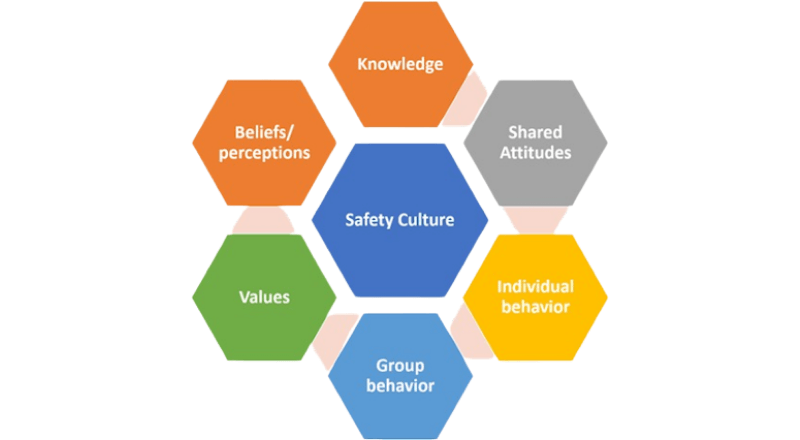
- Safety Culture as a “Hygiene Factor”: DuPont’s model presents safety culture as an organisational trait that should be cultivated top-down. However, in practice, safety culture is often more of a “hygiene factor” than a direct driver of performance. Like other management “hygiene” factors, its absence can lead to significant issues, but its presence doesn’t necessarily improve outcomes unless supported by robust safety systems. Relying on safety culture alone risks complacency, as companies may believe they are protected simply by having a “strong culture.”
- The Bradley Curve’s Limitations: The Bradley Curve illustrates a theoretical journey from reactive to interdependent safety cultures. While visually useful, it oversimplifies the progression of safety maturity, assuming a linear journey that fails to account for real-world complexity. In practice, safety requires constant recalibration, with an ongoing balance between adaptive feedback and proactive engagement. The Bradley Curve’s top-down emphasis can lead organisations to view safety as a “destination” rather than an evolving process.

5. Building Genuine EHS Success: Trust, Empowerment, and Accountability
As an EHS professional, I’ve observed that safety success is built from the ground up, with both top management and employees equally involved in shaping a reliable, effective safety environment. Key enablers of a thriving safety culture include:
- Trust: Safety culture is not merely a top-down directive; it requires mutual trust. Employees must feel confident that their reports and safety concerns will be addressed without fear of reprisal. Trust fosters open communication, essential for identifying and mitigating risks.
- Empowerment: Workers should have the authority and resources to take immediate action when safety concerns arise. Empowered employees proactively address issues, creating a culture where safety is a shared responsibility rather than a management mandate.
- Accountability: Leadership must embody commitment to safety through transparent actions rather than rhetoric. Accountability at all levels builds a cohesive safety environment where both management and the workforce are responsible for upholding and improving safety practices.
6. Moving Beyond the Traditional Safety Model
For a truly effective safety framework, organisations need to evolve beyond symbolic metrics and benchmarks. A balanced approach grounded in adaptive, trust-driven practices will outlast rigid, top-down models like the Bradley Curve. Real safety culture is nurtured through continuous engagement, where feedback and adaptability are prioritised over achieving arbitrary maturity levels.
Conclusion
The decline of the DuPont model underscores the need to rethink traditional safety approaches in favour of trust, empowerment, and accountability. Incidents at DuPont and BP illustrate the dangers of prioritising symbolic safety culture over genuine, actionable safety practices. Safety culture alone, without robust systems, is insufficient. For EHS success, organisations must shift from focusing on a “zero accident” mindset and the allure of the Bradley Curve to embracing a dynamic, participatory safety model that adapts to real-world complexities.
References for Further Reading
- Incident Analysis and Lessons Learned
- U.S. Chemical Safety and Hazard Investigation Board (CSB) Reports: Detailed analyses of incidents at DuPont Belle, WV, and La Porte, TX facilities. CSB.gov
- “DuPont: Who Lost the Legacy?” Occupational Health & Safety magazine.
- Trust and Accountability in Safety Culture
- Cooper, D. (2000). Towards a Model of Safety Culture. Safety Science.
- Hopkins, A. (2006). Studying Organisational Cultures and their Effects on Safety. Safety Science.
- Critiques of Maturity Models in Safety
- Conklin, T. (2019). The 5 Principles of Human Performance: A Contemporary Approach to Workplace Safety. PreAccident Media.
- Hudson, P. (2001). Safety Culture—Theory and Practice. Safety Science.
B Karthik
4th November 2024 1pm.

 Health, Environment, Safety, Sustainability (HESS)