

#246
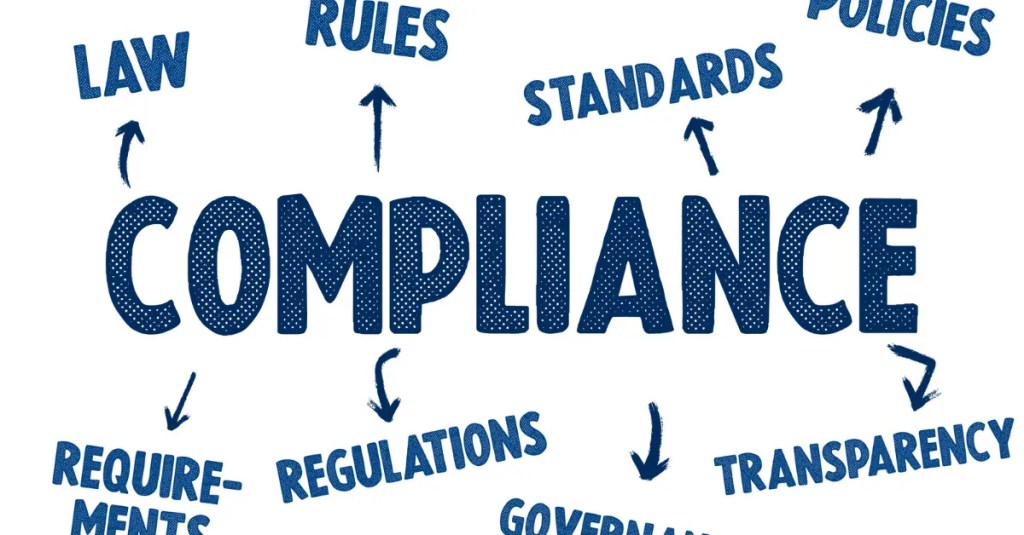
For decades, organisations have operated under the belief that compliance with legal and regulatory requirements is synonymous with safety. In many industries, particularly in India, this mindset is deeply ingrained. Regulations, many of which were drafted decades ago, have not kept pace with rapid technological advancements. Meanwhile, technology itself has outpaced organisations, introducing complexities that many companies mistakenly perceive as merely complicated problems—leading to serious safety lapses, product recalls, and operational disruptions.
The Compliance Trap: A False Sense of Security
Many companies take comfort in compliance. If they have ticked all the regulatory boxes, they assume their workplaces are safe. However, history has proven otherwise. Some of the worst industrial disasters, from Bhopal to Deepwater Horizon, occurred despite companies being ‘compliant’ on paper.
Regulatory compliance often operates at the bare minimum—a standard set by governing bodies that is usually reactive rather than proactive. While it establishes a baseline, it does not drive excellence, nor does it fully account for emerging risks from new technologies, automation, AI-driven processes, or supply chain complexities. Companies clinging to outdated regulatory frameworks will find themselves blindsided by risks they never anticipated.

The Evolution of Systems: Simple, Complicated, and Complex
To understand why compliance alone is no longer enough, it is essential to differentiate between simple, complicated, and complex systems.
- Simple Systems: These are straightforward, predictable, and easy to manage, like a traditional assembly line or basic workplace safety protocols.
- Complicated Systems: These have multiple interdependent components but remain predictable, such as an aircraft engine or a large-scale factory with extensive automation. With expertise and troubleshooting, complicated systems can be mastered.
- Complex Systems: These are dynamic, adaptive, and have non-linear interactions. They cannot be entirely predicted or controlled, such as AI-driven industrial automation, supply chain networks influenced by geopolitical events, or large data-driven safety analytics.

The Compliance Gap: Failing to Address Complex Systems
Traditional regulatory frameworks were designed for simple systems and, at best, anticipated complicated systems. However, in 2025, the rise of complex systems due to rapid technological evolution has created challenges that compliance-driven approaches fail to address.
Complex systems introduce emergent risks—issues that arise not from individual components but from the system’s overall behavior. These risks are difficult to foresee and can lead to unpredictable failures. For example:
- AI-driven process controls might behave differently based on evolving data inputs, making it hard to predict failures.
- Cyber-physical systems, such as interconnected IoT safety sensors, introduce vulnerabilities that are not addressed by conventional safety regulations.
- Autonomous industrial robots interacting with human workers introduce ethical and legal concerns that compliance frameworks are yet to catch up with.
Technology: The Game Changer That Outfoxes Organisations
Technological advancements are not just innovations; they bring unprecedented complexities. Automation, IoT, AI-driven decision-making, and machine learning are redefining workplace environments. These technologies introduce new risk factors that are not yet fully addressed in existing laws.
The challenge? Many organisations misinterpret complexity as complication—treating new risks as if they were extensions of past challenges rather than understanding their unique nature. This misjudgment leads to:
- Unanticipated system failures in automated environments.
- Cybersecurity vulnerabilities impacting process safety in industries reliant on digital control systems.
- Inadequate response mechanisms for AI-driven decision-making gone wrong.
- Product recalls and liability risks due to unforeseen technology integration issues.
Beyond Compliance: The Need for Voluntary Conformance
In 2025, relying solely on regulatory compliance is outdated. Companies that want to stay ahead must adopt voluntary conformance to international standards, industry best practices, and emerging safety frameworks. Some key strategies include:
- Adopting Global Best Practices: ISO 45001 (Occupational Health & Safety), ISO 31000 (Risk Management), and IEC 61511 (Functional Safety) offer risk-based approaches to safety that go beyond legal requirements.
- Embracing Human and Organisational Performance (HOP): Moving from blame-based cultures to learning cultures that understand the role of human error and system design.
- Using Advanced Safety Analytics & AI: Predictive analytics, digital twins, and AI-driven risk assessments can help foresee failures before they occur.
- Proactive Safety Leadership: EHS professionals must become strategic enablers, influencing management to move from a reactive to a proactive stance.
The Courage to Challenge Management Thinking
Shifting from a compliance-based approach to a risk-based, performance-driven safety culture requires a massive mindset change at the leadership level. This is where EHS professionals must step up. It takes courage to challenge traditional thinking, push for investment in proactive safety measures, and advocate for voluntary adoption of global best practices.
- Are organisations ready to invest in safety beyond what regulations demand?
- Are leadership teams willing to embrace risk intelligence over regulatory checkboxing?
- Do companies understand that the cost of not upgrading safety practices is far greater than the cost of proactive conformance?
If they don’t, they will soon find themselves outsmarted and outwitted—not just by technology, but by competitors who have taken safety beyond compliance to a strategic advantage.
Final Thoughts: A Call to Action for EHS Leaders
The future belongs to organisations that see safety as a value, not just a requirement. The role of EHS professionals is not just to ensure compliance but to drive organisational transformation.
- It’s time to engage management in serious discussions about the real risks they face.
- It’s time to adopt global standards that future-proof safety programs.
- It’s time to bridge the gap between legal compliance and real-world safety excellence.
In 2025, the question is no longer “Are we compliant?” but rather “Are we truly safe, resilient, and prepared for the future?”
Those who fail to evolve will soon realise—compliance alone is not enough to stay in the game.
Karthik
8th Feb 2025
1230pm

 Health, Environment, Safety, Sustainability (HESS)