

#254

Understanding the Divide: General EHS vs. Process Safety Management (PSM)
In the world of workplace safety, two terms often get tangled up, even among seasoned EHS professionals: General Environment, Health, and Safety (EHS) and Process Safety Management (PSM). While both aim to protect people, the environment, and assets, they differ significantly in scope, intent, and application. Misunderstanding these differences can lead to wasted time, misdirected resources, and, in some cases, an “overkill” approach that dilutes focus on what truly matters. Let’s break it down, dispel the myths, and clarify where each fits in your facility—because handling a hazardous substance doesn’t automatically mean you’re in PSM territory.
What is General EHS?
General EHS is the broad umbrella under which we ensure the physical safety and well-being of people, protect the environment, and comply with regulations that apply to everyday operations. It’s about preventing slips, trips, falls, ergonomic injuries, air and water pollution, and ensuring a workplace that doesn’t harm employees or the surrounding community.
- Scope: Day-to-day hazards affecting individuals or small groups—think personal protective equipment (PPE), fire safety, waste disposal, noise control, and air quality.
- Examples: A worker slips on a wet floor (physical safety), a factory releases untreated effluent into a river (environmental), or an employee suffers hearing loss from prolonged exposure to loud machinery (health).
- Regulations: In India, this might fall under the Factories Act, 1948, or the Environment Protection Act, 1986—broad laws that apply to most industries.
EHS is foundational. It’s the bedrock of safety culture in any organization, ensuring compliance with general standards and keeping the workforce safe from routine risks.
What is Process Safety Management (PSM)?
PSM, on the other hand, is a specialized framework designed to prevent catastrophic events involving highly hazardous chemicals—events that could kill scores of people, devastate the environment, and leave a legacy of irrecoverable damage. It’s not about the everyday; it’s about the extraordinary risks posed by specific processes and substances.
- Scope: Focuses on mitigating risks from processes involving threshold quantities of hazardous chemicals that could lead to explosions, toxic releases, or fires. Think large-scale disasters, not individual injuries.
- Examples: The Bhopal gas tragedy (1984), where a methyl isocyanate leak killed thousands; the Texas City refinery explosion (2005), which claimed 15 lives; or the Deepwater Horizon oil spill (2010), which caused massive environmental contamination.
- Regulations: In the U.S., PSM is governed by OSHA’s 29 CFR 1910.119, which lists specific chemicals (e.g., chlorine, ammonia) and their threshold quantities. In India, PSM isn’t as explicitly codified, but elements are drawn from the MSIHC Rules, Chemical Accidents (Emergency Planning, Preparedness, and Response) Rules, 1996, and international standards like those from the American Institute of Chemical Engineers (AIChE).
PSM is about systemic risk. It’s a proactive, engineering-driven approach to ensure that a single failure doesn’t cascade into a disaster.
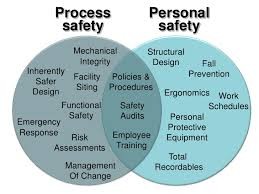
Key Differences: EHS vs. PSM
| Aspect | General EHS | Process Safety Management (PSM) |
|---|---|---|
| Focus | People, environment, routine hazards | Catastrophic process-related risks |
| Scale of Impact | Individual or localized | Large-scale, potentially regional/global |
| Examples | Slips, falls, minor spills | Explosions, toxic releases, major fires |
| Regulation | Broad laws (e.g., Factories Act in India) | Specific to hazardous chemicals (e.g., OSHA PSM list) |
| Tools | PPE, training, housekeeping | Process hazard analysis (PHA), mechanical integrity checks |
The Confusion: Why Even EHS Pros Get It Wrong
Despite these clear distinctions, I’ve seen EHS professionals—and organizations—blur the lines. In India, where PSM-specific regulations are less defined than in the U.S. or Europe, this confusion often leads to overreach. Here’s where the misconceptions creep in:
- “We Handle Substance X, So PSM Applies!”
Not quite. PSM isn’t triggered just because you use a chemical. It applies only to listed hazardous chemicals above a threshold quantity in a process. For example, OSHA lists chlorine with a threshold of 1,500 pounds (680 kg). If your facility uses 100 kg of chlorine in a cooling system, PSM doesn’t apply—but general EHS controls (like proper storage and PPE) do. - Extending PSM to Utilities Like Boilers and Compressors
Boilers and compressors pose risks, sure—explosions or pressure failures can be deadly. But unless they’re part of a process handling a PSM-covered chemical above the threshold, they fall under general EHS or equipment safety standards (e.g., the Indian Boiler Regulations, 1950), not PSM. Applying PSM’s rigorous documentation and auditing to these utilities is overkill and saps focus from actual PSM risks. - Reporting Every Incident as a “PSM Incident”
A minor spill of a non-listed substance or a small compressor leak doesn’t qualify as a PSM incident. PSM events are tied to catastrophic potential—think Bhopal, not a puddle on the floor. Yet, I’ve seen facilities in India mandate PSM-level investigations for trivial events, bogging down teams with unnecessary paperwork.
This over-application sucks time, energy, and resources. It’s like using a sledgehammer to crack a walnut—inefficient and distracting from real priorities.
Real-World Examples to Clarify
- Scenario 1: Ammonia in a Refrigeration Unit
A food processing plant uses 200 kg of ammonia for cooling. OSHA’s PSM threshold for ammonia is 10,000 pounds (4,536 kg). This plant is well below that, so PSM doesn’t apply. However, general EHS requires safe handling, leak detection, and worker training to prevent inhalation risks. Misapplying PSM here would mean pointless process hazard analyses (PHAs) instead of focusing on practical EHS controls. - Scenario 2: Chlorine at a Water Treatment Facility
A facility stores 1,000 kg of chlorine—above OSHA’s 680 kg threshold. Here, PSM kicks in: PHAs, mechanical integrity checks, and emergency planning are mandatory to prevent a toxic cloud disaster. General EHS still applies (e.g., PPE for workers), but PSM takes precedence for the process risk. - Scenario 3: Boiler Explosion Risk
A textile factory’s boiler fails, injuring two workers. This is a serious EHS incident—investigate equipment maintenance, training, and safety valves. But unless that boiler is tied to a PSM-listed chemical process, it’s not a PSM issue. Labeling it as such wastes effort on irrelevant compliance steps.
The Indian Context: Bridging the Gap Without Overkill
In India, the lack of a standalone PSM regulation (unlike OSHA’s clear framework) fuels this confusion. Many organizations adopt PSM principles voluntarily, often inspired by global standards or multinational parent companies. That’s commendable—but it’s critical to apply PSM only where it’s warranted. Overextending it to every chemical, utility, or incident dilutes its purpose and overwhelms teams.
- Tip 1: Check your inventory against a PSM chemical list (e.g., OSHA’s or the EU’s Seveso Directive or MSIHC rules Annexures). No match? Stick to EHS.
- Tip 2: For utilities like boilers or compressors, use equipment-specific codes (e.g., IBR) rather than PSM frameworks.
- Tip 3: Train your team to distinguish routine EHS incidents from PSM-level near-misses. A chemical spill isn’t PSM unless it’s tied to a listed substance and process.
Conclusion: Focus Where It Counts
General EHS and PSM aren’t interchangeable. EHS keeps your people and environment safe from daily risks; PSM prevents rare but devastating process failures. Handling “Substance X” doesn’t automatically mean PSM applies—check the list, check the quantity, and check the process. Misapplying PSM doesn’t make you safer; it makes you inefficient. By understanding these boundaries, you can sharpen your facility’s safety focus, save resources, and—most importantly—protect what matters most.
Let’s stop the overkill and start getting it right.
Karthik
8th March 2025
1130am.

 Health, Environment, Safety, Sustainability (HESS)