Accidents, Industrial deaths are not new; they were happening before, happening as I type now and would happen in future. Where great institutions excel is they learn from such incidents and make sure such incidents never ever occur again. 28 years on Football stadium safety moved leaps and bounds and Passenger ship sinking not heard in my life time so far. They put in great systems, infrastructure, skill based training, Emergency response to Catch the fall, again. (Or perhaps never fall)
So what were Root Cause in a broader sense that lead to these events:-
Complacency:- Both cases absence of previous incidents made leadership to believe situations are all safe. I am think of organisations which have foolishly assumed that No Incidents means all good and great, only to see a major incident wipe business clean. What also happens is in their complacency mode an arrogance creeps in, which isolates /insulates such organisations and the fall is high and mighty.
Error in Judgement:– Authorities didn’t read the situation developing (Crowd Swelling at gate, High speed Ship) that can cause lead to a potential incident situation due to lack of judgement or lack of information, data. This is where a good pre planning (Pre Mortem as Dan PINK calls it would help) to foresee things that could go wrong and put corrective actions. Previous crowd incidents in 1980s UK football matches were never taken note to correct situations.
Inadequate Infrastructure:– The lack of adequate life boats at the super ship, Locked stands which prevented fans from moving around thus leading to virtual stampede. I can quote numerous instances where lack of emergency exits, Exit locked from outside or lack of support system makes organisations sitting duck should things go wrong. Effective safety always comes with world-class Engineering and infrastructure. Nothing more, Nothing less. Everything else is secondary. Great organisations which value human lives, work an infrastructure focus to prevent Loss of lives and property damage in an adverse situation.
Lack of Emergency response:- In Hillsborough, precious time was lost in even declaring and communicating emergency. When done and support systems arrived only 14 of the 96 died in the hospital or were on the way when they breathed their last.
I am not listing everything that went wrong! My thoughts are how organisations can learn lessons from such incidents and work a plan to ensure incidents that affect people do not happen in their work place. As I keep saying, No one but terrorist comes to work with an intention to get kill or lose a limb! Still we blame people for things that go wrong??
What can companies do?
Leadership walk the talk, committment to change things, Visible felt leadership.
Risk Assessment for Planning with Normal, Abnormal, Emergency situation, Use guidelines like ISO 31000. Establish action plans for risk mitigation with timely tracking.
Link risks to objectives, Targets and measure. What gets measured gets done. Review.
Establish sound Emergency procedures, practice practice, practice…
Seeing it from local situation, I always wonder? Do ESH folks are there just to say NO /My way or the Highway? Not establishing relationship, influence over peers at work. Unfortunately, my assessment of EHS folks is a sad yes. Of course, such folks are very few in a larger context of Indian scenario of about 3500 Professionals, ( MY guesstimate) but like one bad apple in a basket which can make others rot, bad traits can spread fast.
So what can ESH folks do to not to get in to complacency Mode:-
Human being get in to error mode, be aware of it, Work mitigation considering error is bound to happen. Put in sensible policy (Never to be violated) Guidelines, Rules (Flexible to change). Never put your ego before cause. You are not know all.(Courtesy Hearts & Minds)
Dont push it hard to make them accept. As Phil says, If you push, they will find a way to beat around and would carry out task when you are not around! Remember, hidden risk more dangerous than unknown Risk.
Visible, Visible, Visible and Communicate, Communicate, More communicate. As saying goes, even if you are there on shop floor 4 hrs/day people wd perceive never seen you before. (Like how we find a new model of car on road after good 6 months and then find 3 in 4 hours or you communicate a message 6 times, people would say they heard once)!!! Communication is what listener perceives. All paperwork, desk work, reports can wait. Keeping people safe is Task#1.
This slideshow requires JavaScript.
As Phil says, “Show Must Go ON” I keep saying in my site visits in a more blunt term any Donkey can stop work, it doesn’t require common sense! Good safety professional work a plan to keep business going. Find a way to make sure show keeps going of course, keeping people, property safe is a must. Work Risk assessment, Ask folks, what is the right /safe way to go about it? (They know 90% time, but won’t tell you, Why should they?). As I keep saying” I don’t know What do you Think, or What is your Opinion” Some way ahead would sure be found. Obiviously, for that Safety folks need to keep the saw sharpened on Technical excellence.
Safety profession is all about Trading Places and seeing everything from other’s perspectives as a Worker, As a Plant Manager, As a CXO, as a colleague and help them make see what they can’t visualise !! It is not easy, but then who ever said Safety profession is easy???
Good Luck and God bless.
Regards
Karthik
13/4/17 1900 hrs.
PS: 1) I reproduce Phil’s Blog for those who dont have web access.
Two weeks ago I spoke to a fine group of safety professionals at an ASSE PDC on the dangers of complacency and in two days I will speak at the Michigan Safety Conference about shifting the focus away from body counts in favor of the things that cause safety. In preparing for both of these topics something that had always bothered me became clear: Safety is a series of trade-offs and compromises. I can already hear my detractors, “That’s La Duke endangering the workplace with more his safety heresy.”
But think about it, “safe” is a relative term. Is it safe shooting a movie at the Packard Plant? No when compared to shooting in a sound studio, yes compared to Detroit Animal Control capturing a scared and agitated tiger in the abandoned and unsafe labyrinth of tunnels below the plant (it had escaped during a German video shoot).
This weekend I saw a “health tip” on avoiding the flue: “get the flu vaccine, wash your hands often, and don’t touch handrails.” Now I know of at least four workplaces where an employee can get written up for NOT touching the handrails while traversing steps. When I worked and Trinity Health (by people who really KNOW about the subject) we were a) required to get a flu shot, b) had ample dispensers of hand sanitizer conveniently located and c) were told not to touch the handrails, rather to hold our hands slightly above the rail so that should we begin to slip and fall we would be able to catch ourselves. For the record this is how handrails are intended to be used. The idea is less about eliminating the risk of falling, and more about the mitigation of the risk of injury; to reduce the consequences of slipping on the steps.
Tradeoffs are part of our job we want people to be alert and vigilant and to focus on the tasks at hand, and yet we know that remaining hyper-focused tends to lead to attention fatigue, where are minds can no longer focus at such a high level and errors become exponentially more common. So by pushing awareness and focus we at some point actually create hazards.
Complacency is another area where we have to pick our battles. On one hand we want workers to be confident and competent in the tasks they do, but on the other hand we don’t want them to get TOO confident either; it’s an on-going battle.
Just Say No Doesn’t Work
Too many safety professionals see themselves as guardians of all their flock. These safety professionals tend to discount the life experience and decision making abilities of their people and think they know better in all cases. And when safety professionals develop this attitude they get in the business of saying “no, that’s too dangerous”. I have occasion to be the Production Safety Consultant on a big budget action film. Action films, despite the extreme precautions to reduce the risk of undesirable outcomes (it’s not just injuries, but destruction of property, damage to equipment, etc.) action films remain a fairly high risk endeavor (as compared to shooting at an outdoor Paris café) but safety people need to recognize that the old adage, “the show must go on doesn’t just apply to Hollywood or Broadway but to oil fields, and auto manufacturing, or logistics, or bio tech, or well… you get the picture (no pun intended). Everywhere the work has to get done, ideally safely, but if you tell them “no” they will just wait until you aren’t around to do it. And hidden risk is deadly risk. Our jobs in safety has to be about helping people make informed decisions about the risks they take, not making global rules and procedures because one person made a bad decision. We have to be better than that, but being better than that is a lot more work. Safety is not a profession for the lazy, and point of fact I haven’t met that many lazy safety practitioners (the problem is the ones who are stick out in my memory). I’ve met plenty of crusaders who have an exaggerated sense of their own importance to the organization, and I’ve seen my fair share of bellyachers (you have to remember that through my writing, blogging, speaking, and consulting I meet a LOT of safety professionals that traverse geographies, cultures, industries) but mostly I’ve met good safety who are earnestly trying to do the best job they can. Most are respectful, thoughtful, and intelligent, and most would agree that safety, and the steps we are forced to take are often compromises that keep us up at night.
This post is not about the Guys from Norway who took the music world by storm and set world on fire in English Pop music industry during 1980s!
This question came in Whatsapp Group! “What are Industries’ ESH Needs Tomorrow and how professionals can be different from one another to make a difference?-” by a gentleman! What makes ESH and Companies get that “A-Ha moment” to Take them on and go hunt High and low to be a winner!!
I thought of sharing my views, so this post!! I assume tomorrow indicates a 2-5 year window!
Leadership Engagement:- With the new Standard of ISO 9001, 14001 out and new 45001 expected to come later this year, the Industry needs to align its leadership participation to the needs. No Longer “MR” the Scapegoat, Smooth operator or can be the fall guy. The new standards place a lot of emphasis on Leadership participation to align to policy, set vision, set objectives, targets review as well as lead the company beyond now to engage in new frontiers of business expansion.
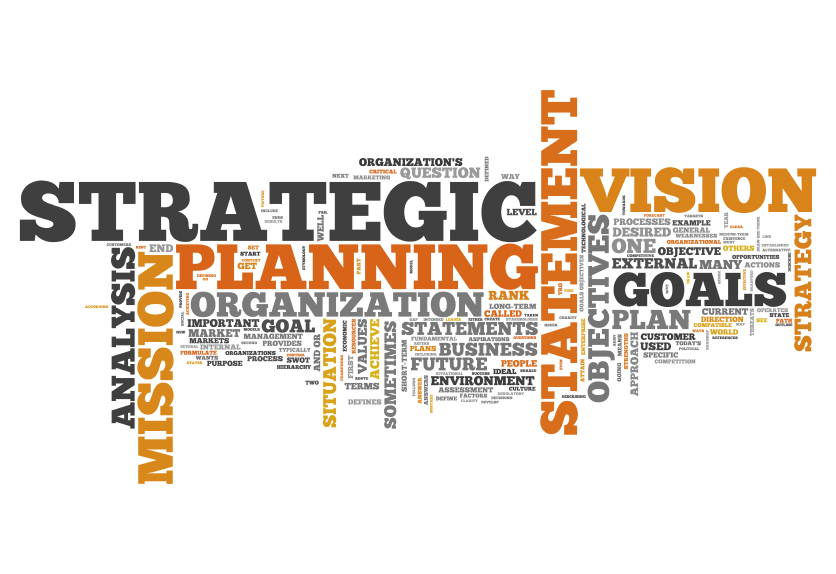
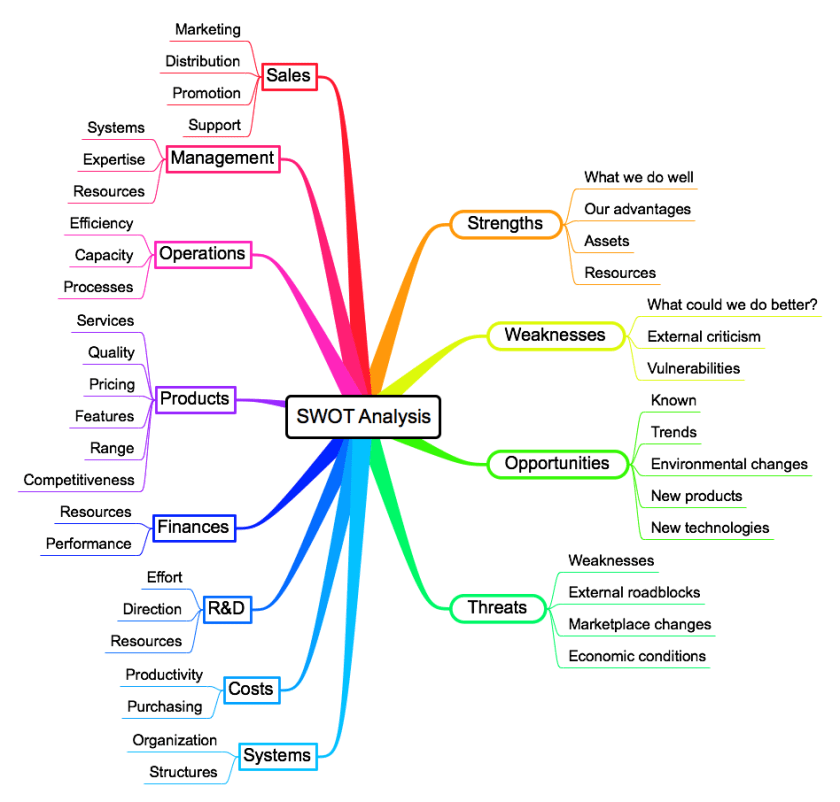
Strategic Planning:- One of the key differentiator of excellence is to predict the future as well as foresee it. The enabler for executing this is through a good strategic planning covering 3-5 year window. Analyse SWOT PEST model and identify issues. Work the resources required. Even if a hit rate of 0.5 is achieved, you are ahead of the curve. EHS professionals need to go beyond Tech aspects to master Fin, HR, Ops aspects and that’s where basic management knowledge would go a long way. Integrate this as a way of doing business with linkage to Facility/Business/Operations/ Country/Region Risk Portfolio. Strategy is key
SWOT with 5 forces
Legal and other requirements:- The legal requirements which are the law of the land is not expected to change much given the low priority government always gives to such sectors. At the same time, the stakeholder outreach, joint venture participation, foreign investments in the Industry would set out expectations to implement some standards, codes, fundamental requirements etc which the interested parties may insist be complied as condition of business. Companies who want to surge ahead and ESH professionals who want to be different need to know these and work a plan to implement them so that due diligence occurs with less acrimony or suspicion. Also remember ESH is a dynamic target to shoot when you are on the move on tread mill, so watch out on the horizon for requirements that can impact your business besides ever-expanding scope of EHS. ( Business Continuity, Product Stewardship, Ergonomics, SARS, Furlough, Work Place Violence, Vulnerability assessment, Dept of Homeland Security, were unknown terms good 20 years back!!)
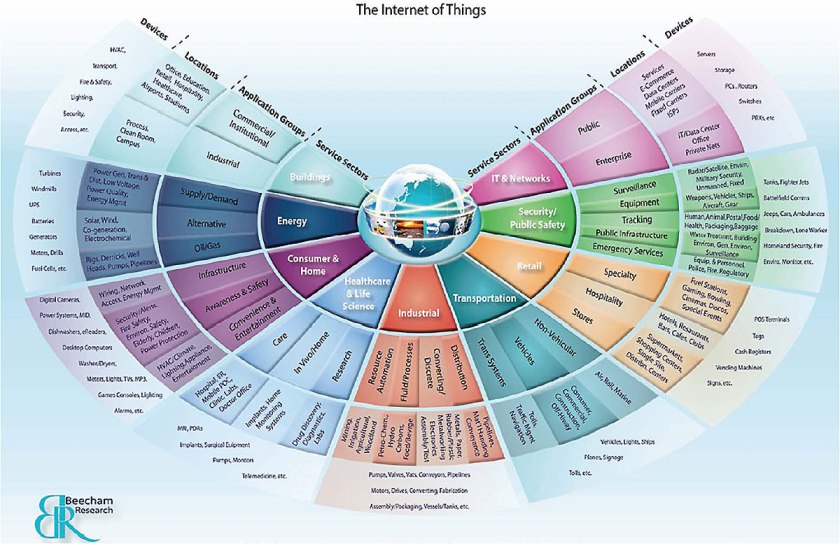
Embrace Technology:- The internet of things is here, work to spruce up your enablers. Excel is long dead and buried, Apps are new norms, Data is divine to slice, dice and form an opinion with justification. Views of new generations born after 1990, matter to maintain sanity in workplace, so seek them through tech devices. Work audio-visual aids as evidence and to strengthen your training and communication programs. Knowledge sharing thro portals is minimum expected like wearing shit/trouser. collaboration for inputs in developing programs, procedures, process, protocols is minimum expectations through Cloud based infrastructure. Of course, nothing can be achieved without fine tuning self in terms of relationship, engagement, emotional awareness. Work appropriate methods to calibrate them in a frequent manner. (Courtesy Beecham Research)
Finally as an individual what would you do to keep yourself different, spotted in the crowd? Ultimately, that’s what matters!
Growth and Customer focus is key to everything you do. Be it home, work, environment. You are out to sell yourself. Work Personal Brand, know yourself your strength, weakness! Convert weakness as a strength to work.
Get Results:- You are measured by what you delivered. Salary, # kids, Fulfilling committment, Tasks completed, % Incentives, all linked to results. Moral victory of nearly achieving and just missed counts to nothing!! No one remembers who was #3 or #4 in any event. It is always top 2 at most. So work to get results through planning, execution and go beyond!
Make people better:- You being professional has a duty to fulfill and your actions would have an impact one way or the other in people whom you influence. Work the best out of them, make them better in areas you can help them learn and grow through interactions, communications etc. As saying goes, “People join the organisation, but leave the manager”!!!!
Hope this helps folks to prepare themselves and their organisation for the tomorrow. Good Luck and God bless.
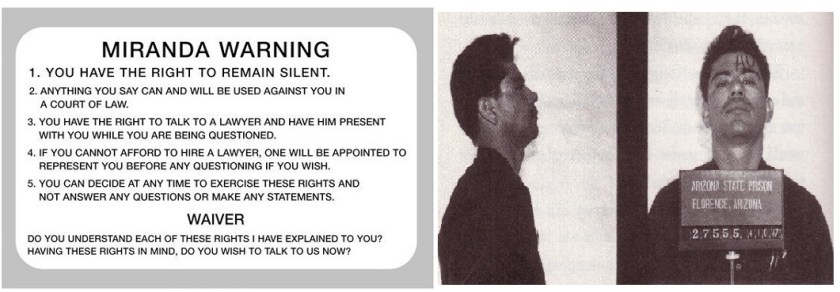
One of the biggest fad I am seeing and asked to participate is implementing the Behaviour Based Safety (BBS) Sham!! I can’t quote of 10s of instances over the last 5 years, where I was called to implement BBS as a consultant “I read the Miranda warning first too”. Few weeks down the line everything goes quiet and program falls through the rails or we find clients totally not ready. Why??
As I keep saying in my training sessions to make it clear to FOLKS, Implementing BBS is not a consumable like eating Noodles. You boil water, pour noodles and taste maker and after 3 minutes your hunger is gone and purpose of quenching hunger is served. Rather, BBS is all about shedding your extra weight from your body through discipline, exercise and routine regime that requires plan, doing, checking, acting up on review. Unfortunately, in an Indian context many companies fall victim to what we term as “SNAKE OIL Salesman” who hypnotize top leadership, (even 8/10 ESH professionals are guilty by association who havent understood the concept) that behaviour control would solve all the safety problems at facilities and pull wool over their eyes. And top management in their greed to save investments in other capital expenses or other form, fall victim. Also BBS is not copy/paste…….
So what is the right way to work the BBS if at all organisations are serious about injury reduction intent !!
Establish baseline —> First check where you are in EHS journey implementation. The following curve would be a good example. As clearly indicated in the curve, Behaviour change is the last mile connectivity to quote current language. Unless the other elements are mostly in place, which are determined by analysis of baseline planning, working at people behaviour change etc working without addressing this is an insane way would only deliver insane results. BBS is a journey.
Pitfalls to effective BBS implementation:- Even after setting up a sound infrastructure, Management systems, Indicators, 0 Fatality program things can fail!! Why? because no two human being is alike. There are barriers in terms of people, systems, infrastructure etc.
The other reason BBS is a failure is Rifle vs Shot Gun approach. BBS needs Rifle approach of Aim->Fire. Shot gun approach is more a spread target!! So in Rifle approach folks needs to clearly know the behaviours that needs to be tackled head on called KEY FOCUS Behaviours. For that, one needs to have past history of incidents,accidents that are investigated and root causes linked to behaviour pattern are determined. The repeated behavioural patterns that cause most incidents (Say top 5-6) needs to be focused for a rifle approach. Many companies miss this or lacks sound incident investigation plan, metrics, history. They lose focus in to mix up behaviour and conditions monitoring.
If you want BBS to succeed,identify the key barriers that can cause the process to derail even after you identify key focused behaviours.
So what are the barriers that can derail effective BBS implementation.
Lack of Hazard Recognition and Inadequate, ineffective Response to Hazards.
Business Systems, Process inadequate to handle safety /behaviour issues.
Infrastructural inadequacies to address behavioural issues.(Non Enabling behaviour)
Hygiene factors Rewards, Recognition aligned to individuals, lack of safety perception.
Personal Factors, Culture, Personal Choice.
Disagreements on what are the right safety practices.
Inadequate resolutions of issues brought out in BBS observations by Steering team.
To keep post short, I don’t want to go in to details on 10s of issues on Barriers that impede BBS implementation that I have seen in Facilities and no wonder programs fall apart when corrective actions don’t happen.
So what else companies need to do sustain BBS long-term (say beyond 18 months when steam can fizzle out).
Fix new targeted behaviours to focus as BBS evolves.
Crop new observers, familiarity can bring contempt, complacency.
Support the observers with resources, embrace technology, go digital, show visible changes.
Target Barrier removal % and move the needle, display progress to all.
BBS expanded to all areas over time, all personnel including guests, contractors, visitors fully in scope.
Leadership Engagement/Involvement. No program thrives without this element.
Steering committee rotation, insight, knowledge.
Ownership spread to all level, ultimately every one becomes an observer.
As I keep saying, nothing I post here in new or not known to folks, the question is the gap in knowing/doing. Great organisations through effective leadership, risk based approach, empowerment to employees bridge the gap and execute every program flawlessly.
I wake up this morning to hear a Fox news summary podcast (every hour, 24*7) of a boiler explosion in St.Louis, MO which killed 3 and serious injury to 4. Such incidents happen whichever part of the world leaves you a bit demoralised for a while! I also read John Newquist FB post on this at 530am! It appears that an exploded boiler piece flew 500 Feet and landed on roof adjacent building killed 2 persons there! It also appears that this incident affected few folks who were on their first day on job (Monday 8am filing papers)!!
Such incidents, an Act of God, as we call it can happen to any entity! I recollect with Horror a Major accident 30 years back in an upcoming Paint Intermediate Manufacturing facility at project stage at Ankleshwar, which killed 5(?) people including to be married soon Engineer. It was due to a pin hole through which steam seeped in and causing explosion of the RM storage tank which was getting heated. The global project contractor has installed Ten such installations all over the world, until then, without even a PIN PRICK to an employee!
Act of God or not, there is a legal obligation for statutory authorities now to investigate incidents and put corrective actions in place. There would be some consequences for the affected entities with fine, penalties as well as possible case for man slaughter. Ofcourse, the positive side is great companies would learn from even the Act of God incidents to put in programs in place to prevent recurrence. I recollect our efforts to put in a Lightning Protection program to field employees when one of our colleague was killed while working in open, stuck by Lightning in Latin America dozen of years back. This included prevention, protection, forewarned aspects covering preventive, reactive, proactive measures. Thankfully, over next 15+ years not one life was lost despite increase in exposure.
So such incidents would continue to happen, court summons would come, exposure to image, liability, public outrage/sympathy would be the norm. So what can ESH folks do from their perspective to protect the first and foremost responsibility, which is to protect companies interest at all costs and add to bottom line? (Nothing more, nothing less, Safety First, is all an EMPTY SLOGAN, thankfully I never believed one minute even 30 years back, may be the Gujju water I drank, in me !!)
Comply with Legal Requirements !! Cross the “T”, Dot the “i” make sure that requirements are up to date. Tests, inspections, calibration, monitoring are not passed over due for any items. The scrutiny of such government agencies investigation can go back years. (As was case when records were searched as far as 28 years back)
Ensure that Risk assessment are done. It shouldnt come as a surprise shock and dismay to authorities that such act of god incident is thought off only after the accident. Learn from others and cover in risk assessment even such Black Swan scenarios! While you can’t do much to mitigate, when such happens, to be “Forewarned is ForeArmed” as saying goes!
Ensure Asset Integrity are all current. A good preventive maintenance program usually helps to prevent such accidents. (As saying goes, God also helps only those who help themselves so be an Atheist,never leave thing to God to help)
Carry out routine assessment, inspection, Audits of areas /facilities as a whole, with planned approach and tracking mechanism. Keep such documents up to date. Work out corrective actions as required without undue delay. Never leave smoking gun. Work deadlines that are practical, meaningful and doable.
Work out training to all employees that are affected by area,actions, training and communication, helps to remove ignorance and creates awareness. Everything done to make people protection a key aspect helps to salvage some positive points in the eyes of Jury.
Establish the dialogue process with employees through Safety committee(ESH Committee meetings) to bring in their concern, suggestion, opportunity for improvement. Work on such requests with priority, close the issues one way or the other ! This also helps morale at workplace and makes employee give positive feedback about company’s efforts in the eyes of investigator when company culture would come in scrutiny.
Of course, Legal aspects are left to legal experts, take their guidance at every stage and work a plan. Never shoot yourself in the foot. I recollect a Senior executive, a good friend of mine of an Indian Pharma Major losing his coveted job when some uncontrolled documents in his possession (Kept folded in his work diary) lead to incriminating evidence against the company during the “FDA Inspection” meeting at conference room !!! Truth is stranger than fiction as I keep saying!!
So such incidents of ACT OF GOD over which we have no control can happen and we can’t decide the outcome. (near-miss or Fatality based on luck, chance)! Best in class business work everything that would try to swing a positive opinion in the eyes of judiciary, public etc so that consequences to the business interest, reputation, damages are as minimal as possible through their actions. So be a WORK Atheist working only on logic, rationale, risk assessment and common sense in to play and never leave things to GOD!! ( I always say GOD= Good Only Deeds)!!! Good LUCK and GOD BLESS Karthik.
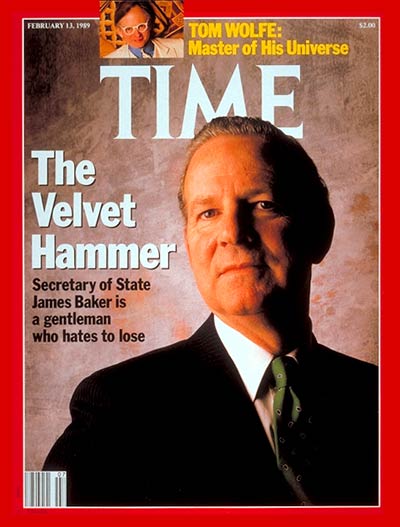
You may wonder what is that, Ex-White House Chief of Staff, Former Secretary of State, and Treasury Secretary who served Three American Presidents, (Ford, Reagan, Bush Sr.)has to do with Safety….!!!!
James Baker III, who would turn 87, in a few days time, was the Head of the panel that authored the scorching /Scathing Incident enquiry Report during Jan 2007,(10 years on!) on bp Texas City Disaster of March 2005. The Explosion killed 15 people and injured around 170. Baker spent 100s of hours with team, sub team, came with a 360 Page Report which is an eye opener for every ESH professional to go through and work on improvements at their facilities. The reading of the report is a must, more so if you manage or connected to Process Safety Management of hazardous process and chemicals at every technical function as per OSHA 1910.119 or equivalent. ( I would say, in an Indian crude primitive equivalent, would be if your facility is covered under Chapter IV A of Factories act in a vanilla version).
As James Baker points out in the bp report, ( as was in other disasters like Piper Alpha in which Lord Cullen worked a Report) lack of following elements lead to major incidents. The report points out to gaps, in the following elements of Safety program implementation thus leading to the disasters.
Piper Alpha Memorial, 167 men lost their lives 1988. Hazlehead Park, Aberdeen, Scotland!
Corporate Safety Culture.
Process Safety Leadership.
Employee Empowerment
Providing resources and ensuring process safety capabilities.
Incorporation of Process safety elements in to Management decision process.
Process Safety management Systems thro Risk based approach, Communication, Auditing, Learning and stay on course not letting complacency in!
Many oil companies launched voluntary, internal process safety management (PSM) audits based on the Baker Panel report and also CSB’s overall recommendations. Some have even conducted process safety culture evaluations. The Baker Panel concluded BP emphasized personal safety to the detriment of process safety (OGJ, Jan. 28, 2008, p. 60).
John S. Bresland, CSB chairman and chief executive officer, said, “The Baker Panel report is one of the more significant reports written on the refining industry in the last 10-15 years. Much of the refining industry is taking to heart the recommendations.”
He added that oil companies and chemical companies are studying the reports.
Companies abroad have requested copies of a CSB safety video entitled “Anatomy of a Disaster” about the BP Texas City explosion.
Steve Arendt, a vice-president with ABS Group Consulting, was contracted by the Baker Panel to lead the independent assessment of the five US BP refineries on behalf of the panel. Since then, he has given about 100 presentations to various industries, including talks to more than 40 oil companies.
“The effect of the Baker report and the CSB investigation was the equivalent of an extension of Sarbanes-Oxley to process safety,” Arendt said. The Sarbanes-Oxley Act of 2002 requires top executives to certify corporate financial statements. It was enacted as part of the response to questionable accounting practices at companies, including Enron Corp.
“Process safety is now on the radar screen of boards and chief executive officers,” Arendt said. “It became much more of a board-level topic because of the Baker Panel’s conclusions about the organizational culture issues that existed in BP at the time of the accident.”
Companies have used numerous approaches to apply lessons from the reports of the CSB and the Baker Panel, said Arendt, who encourages senior managers of oil companies to connect the lessons from both technical evaluations and culture evaluations.
“If you don’t address organizational culture, then all the problems uncovered from a technical standpoint are likely to return,” Arendt said.”
So How companies can go about it!!So what is that best in business have that make them excel in Process Safety Management and work in a highly hazardous material, process environment that make safety happen like walk in the park. Implement PSM-MS (CCPS is a good guideline) which goes beyond OSHA 1910.119 with focus on following elements. Always look and reach out for support /expertise.
#
CCPS process safety elements
OHSAS 1910.119 Linkage
HSE Standards Norms References
Commitment
1
Process safety culture
HSE Commitment Program.
Alignment Contracts.
Management & Resources ownership. Accountability.
HSE Improvement Plan
2
Compliance with standards
Process safety information
Legal and other requirements
New Plant Equipment and Process Design Norms.
Storage and Handling of Dangerous, Hazardous and Non Hazardous Materials
3
Process safety competency
Basis of Safety
Selection and Training, competence of personnel
HSE Management Resources
4
Workforce involvement
Employee participation
Communication and Consultation Standard
Site HSE/PSM Committee
5
Stakeholder Outreach
Communication and Consultation Standard
Community Relations Programs /Outreach
Community HSE Performance Interaction, Feedback Reports
Understand Hazard and Risk
6
Process knowledge management
Process safety information
Basis of Safety
Technical Plant Documentation, Dossiers
Transfer of Technology as applicable
7
Hazard Identification and Risk Analysis
Process hazard analysis
Hazard Studies
Periodic Hazard Studies
HSE Assurance Standard, Escalations, Site Risk Portfolio
Material Hazards Standard
Fire Risk Management
HSE Risk Management
Risk Assessments of Existing operations (Normal, Abnormal, Emergency)
Major Hazard Facilities
Manage & Mitigate Risk
8
Operational Procedures
Operating procedures
Plant SOPs customised to site, not corporate procedures
Systems of Work Standard
9
Safe Work Practices
Hot Work permit
Permit to Work Suite
Job Safety & Environment Aspects Impacts.
10
Asset integrity and reliability
Mechanical integrity
Plant and Equipment Integrity program
11
Contractor management
Contractors
Contractors & Suppliers Protocols
Onsite Contractor SHE Management
12
Training and Performance Assurance
Training
Basis of Safety
HSE Training
Selection and Training, communication protocols
13
Management of change
Management of change
Management of Change
Management of Change Non Technical
14
Operational readiness
Pre- start-up safety review
Capital Projects
15
Emergency management
Emergency planning and response
Emergency Plans
16
Learn & Improve:-
Incident investigation
Incident investigation
Incident Management and corrective action
17
Measurement and metrics
HSE Performance and Reporting Program
HSE Performance Reporting, PSM Metrics
18
Auditing
Compliance audits
HSE Assurance program
Auditing and Self Assessment Norms
Corporate HSE Audits.
Internal HSE Audits
19
Management review and continuous improvement
HSE Performance and Reporting Linkage to PSM Metrics
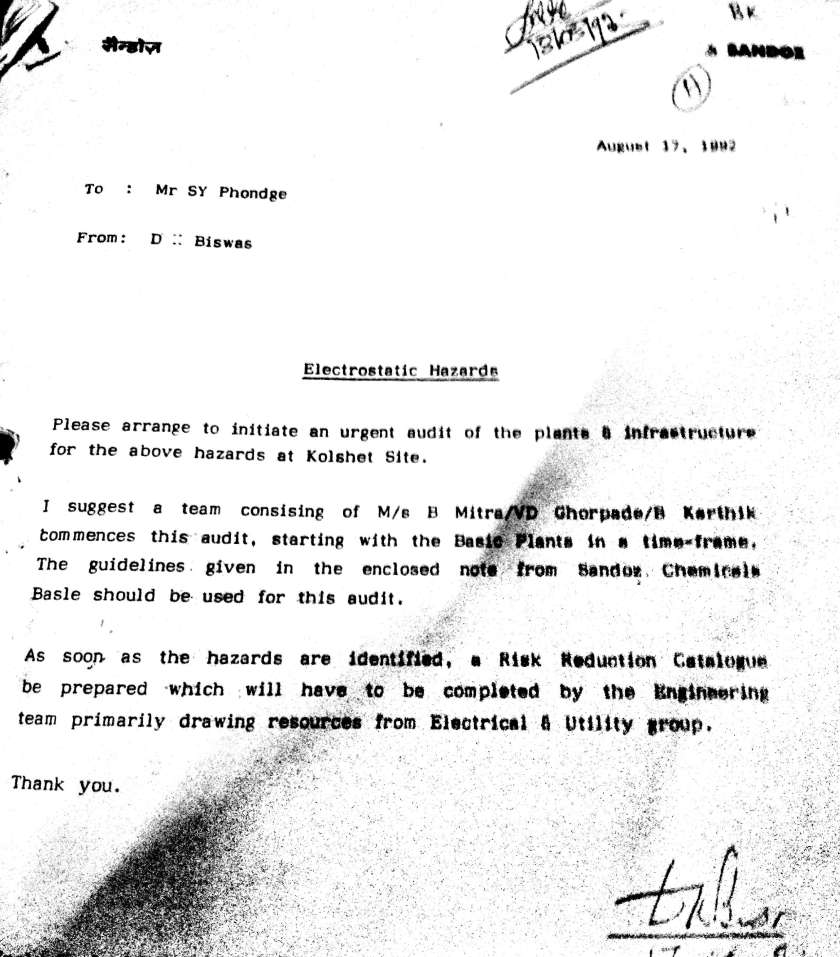
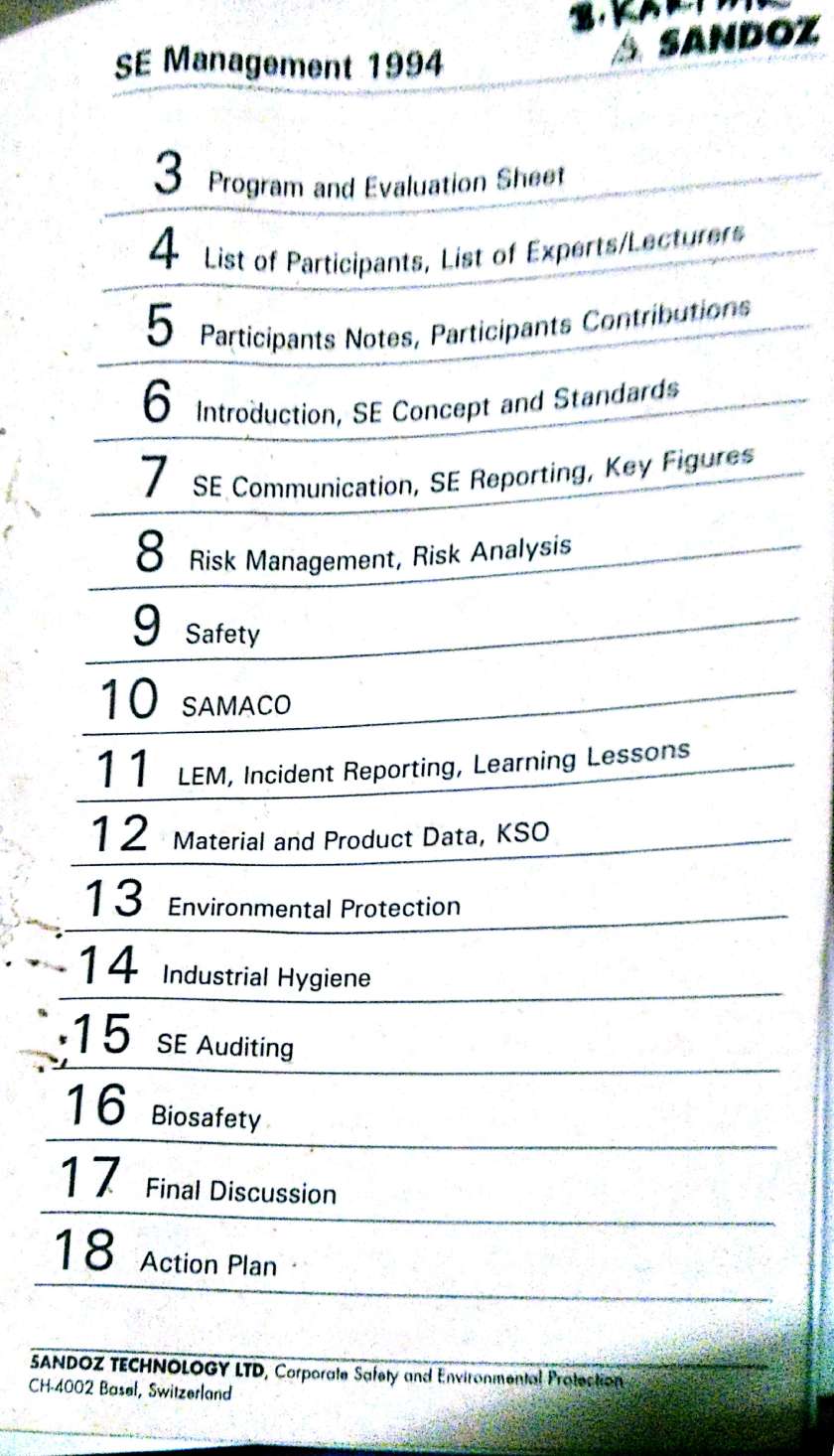
Leadership is very essential to carry out safety programs. Good leaders develop an amazing safety culture. Great leaders have ability to spot potential issues miles ahead and learn from it!!! Great Business leaders have learning culture to work from other company, entity incidents!! Leadership supports the line management…… this was in 1992 on static electricity hazards! Much before any OHSAS-18001 was in place!! (officially came in 1999) (Note the word Risk Reduction catalogue)
Great leaders encourage learning and working the best practices from global perspective beyond legal norms…..
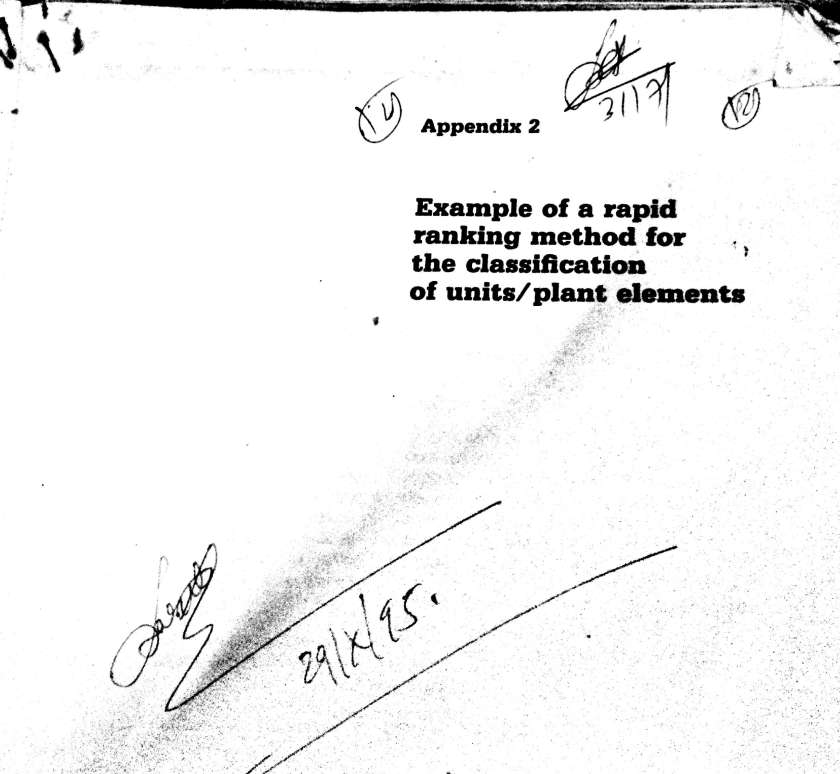
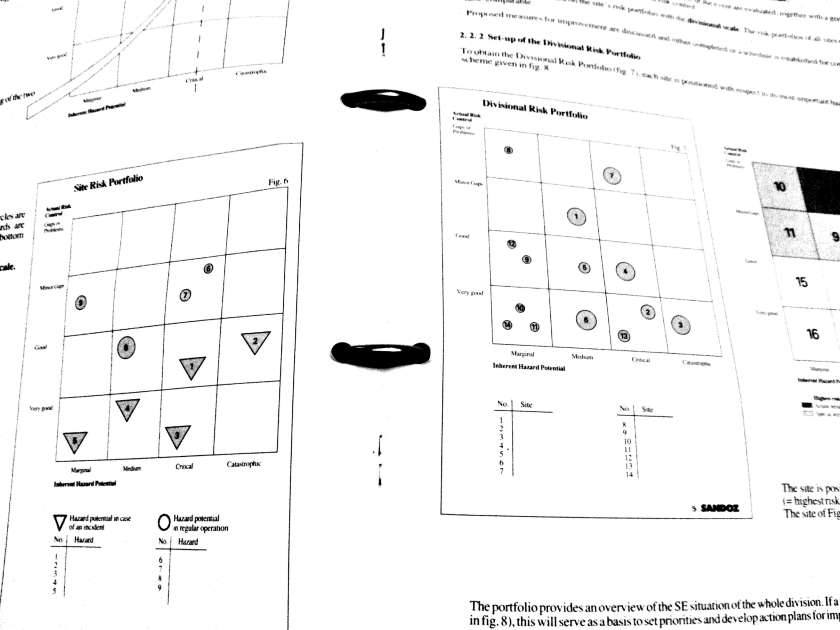
Great organisation work culture is all about focused on learning curve with norms, embracing standards ahead of the curve. They take advantage of best in business protocols.DOW MOND INDEX for process, Product Hazard Ranking. Zürich Insurance, A pioneer in RISK Management with developing Site RISK Portfolio linked to process, products as well as facility siting. 1992…….
Risk Portfolio from Site (Normal ops, Emergency situation) rolled up to Country, Business managed Annually. You want to sleep peacefully, Sweat a lot in working, Risk assessments!
Process Safety Culture Essential ingredients:-
Establish Safety as a core value—-> Values don’t change over time come what may!
Provide Strong, Visible,Felt Leadership—-> Walk the talk, keep track; Stay on top.
Empower Individuals to be successful in their roles, Questioning attitude.
Always Maintain a sense of vulnerability –>Murphy is always around. Be Humble.
Formalise PSM culture work on perception survey, opinion look for blind spots.
Let experts to experts job. Listen and encourage Diverse opinion but data matters.
Openly share best practices, encourage implementation beyond organisation to community, neighbouring industries.
Build, sustain Mutual Trust.
How to execute PSM:-
Don’t Reinvent the Wheel:- (Courtesy ABS consulting which helped Baker in bp, Investigation) Seek Experts.
2) Synergize the process, work for common aspects to implement with current HSE-MS and other Business systems.
3) Embrace the guidelines, documents, go beyond compliance, in absence of local regulations work through global best practices Think Global Act Local. (The Image courtesy, Mhd. Rehman – Houston)
4) Embrace Reality:- Despite working best practices, due to external factors which are beyond an organisation, individual controls, things can slip due to following factors and can derail process safety management program. These would have been some of the latent reasons behind bp Texas City, Chernobyl or Piper Alpha. Watch out for these and ensure that guards are put in place.
Overload due to too many initiatives losing focus, flavor of the month to drown signal from the noise.
Change of personnel, in environment where systems are absent personal expertise carries the game. When they change, system just buckles down! Watch out! Great companies make things happen due to systems, not individuals!
Absence of continuity in leadership, systems, hallmark of success in many organisations are continuity in people, program, process such that it becomes second nature,mundane.
Complacency, when things appear to go extremely well, expect it to nosedive and go bad, NO NEWS IS BAD NEWS!
Confusing data! inconsistent representation of data, metrics and unit of measure.
No Knowledge sharing:- Greatest derailer of all, Knowledge is the only resource that doubles when given. Many don’t see that way due to personal insecurity.
Confusion in reporting norms:- Work on one company ONE DATA. One protocol. Language used should be consistent.
Loss of Data /Information. Always work back up, restoration mechanism.
Process Safety Management when executed well can lead to safer workplace, improving productivity.
I read Phil LaDuke’s blog post of 2009 in which he had written about “Selling ESH in Tough Times”. This was during the 2008 global financial crisis where it was easy for companies to interpret ESH implementation as a “do Just enough to hang out there”.
The 2008 Financial crisis left India with little or practically no impact. Ever since that time, the global economy is kind of stuttering along with no clear sign of fast growth, development happening. The Oil Prices fluctuations, the uncertainties in political environment are all not very comforting. Also, unlike 2008, India is now more globally coupled and so when things go North or South globally, there will be some impact on Indian scenario. I am already hearing murmur with stagnant economic growth, ESH corporate positions are downsized to lower level back fill. ESH Heads are asked to shunt out of Corporate head office to Manufacturing location to save overhead costs. I am puzzled to hear ESH business travel by corporate Head folks require approvals and lot of hairsplit debate, in spite of funds being sanctioned in T& E. This shows squeeze is beginning to show and happening here, alebit a very slow pace.
So what is that ESH professionals can do to inoculate themselves and do a better job to showcase ESH as value add to business and weather out the storm, should one blow across. I am posting from my experience of having weathered one, 10 years back, where we had faced worst impact, first hand.
1)Inner Self:- Unless you have a Sound mind and Sound Body, you can not have energy to manage the challenges that might arise. This picture captures it aptly, sound mind and sound body helps. Keep yourself happy. Respect your body and soul and treat it well. Energy levels are managed through controlling Physical Energy, Mental Energy, Emotional Energy, Spiritual Energy. Set time to exercise, de-clutter your mind, Meditate or take stock of things, maintain a log /journal of happening.
Sound MInd Sound BodyMy Journal 2008-12 to capture thoughts of flash, Sleeping…. Now I use Evernote.
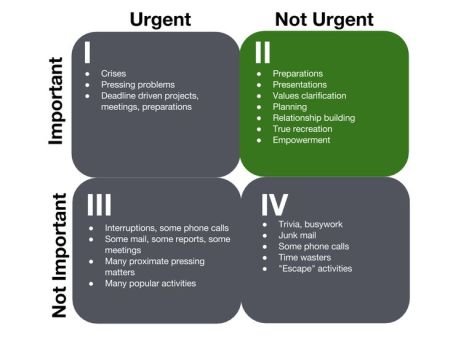
2)Once you bring in your inner self in to a discipline, rhythm, focus on environment around you. Prioritize on tasks to be done as below. This covers Family (Always First), Work, Society, Environment, Community, relationship etc etc etc.
3)To be a successful manager at work, you need to exhibit the following,
A)Business acumen over all sense of what business you are in, what are potential opportunities, threats, challenges, who are our competitor, who can be new entrants who can cause damage. How ESH fits in scheme of things. What value add we can add to the business.
B)Core Competence:- Always stay strong on Technical excellence, know the regulations, work the best practices from global outreach, think global act local. Be ahead on the steep learning curve. Subscribe to professional journals, newsletter, emails as appropriate to stay current. Keep your network strong, interact with fellow ESH folks across Industry, City, Zone, Country and International forum. Keep an ear to the ground for all the happening.
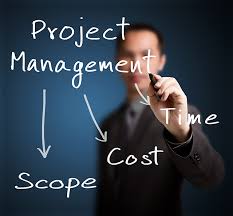
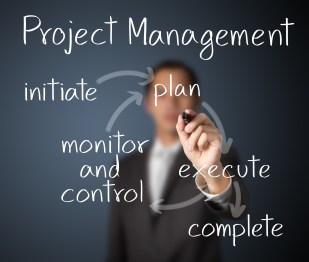
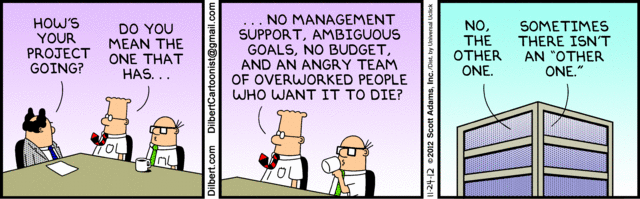
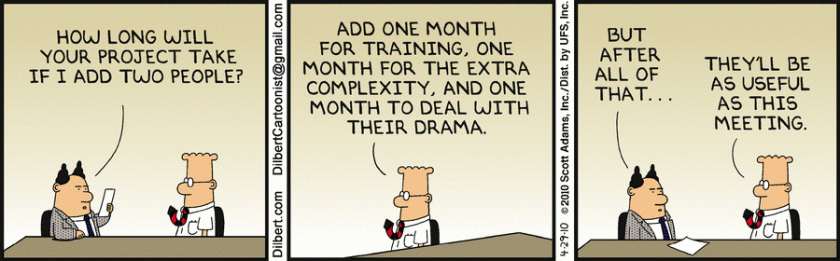
C)Projects and tasks management:– (Begin with an end in mind) As the memorable saying goes, How to eat an Elephant? “one bite at a time”! In work term, Projects to execute are way to go about the same, (Policy, Overview, Risk Management, Mitigation plan-Which I am not going in to details here) The key in any project management be it capital, financial, ESH, People etc is to identify the key steps that form the back bone as well as critical tasks that are subpart of project, in which failure to complete can lead significant deviation. Also note all projects need to be linked to on time, on budget with a clearly identified owner to lead and execute as Champion.
Hopefully, in your organisation, the projects dont go this way…. (believe me I have been part of such scenarios, not too far back, so shit happens to every one!!!)
D)Great Salesman:- Always look from other’s perspective, what is in it for them? Why they should listen to you? What benefits they get out of listening to what you suggest? Think and work like a Salesman. (ABC of Selling, seller beware!!)
E)Hallmark of great leaders and ESH Managers who have made an enormous impact in corporate is that they “LISTEN” they seek to understand all point of view, they are open, honest, transparent. Being a great communicator, they don’t feel pressure to be understood, that work effortlessly. Always have an agile mind to change thoughts according to situation. Remember,ESH being staff function is more a servant based leadership.
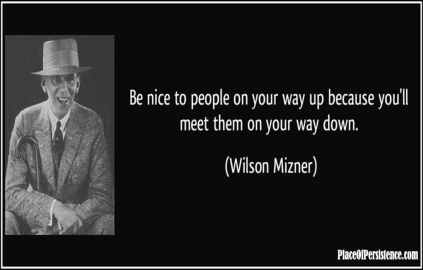
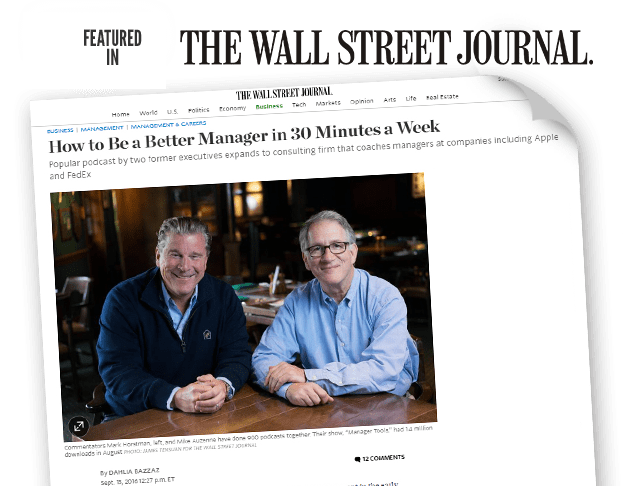
F) Great managers develop great team around them and exert enormous influence. It is all about relations at work. Work that through, 1) Coaching, 2)Performance Review & Development, 3)Delegation and develop relations through One on One of 30min/week to know your people. Relationship can go beyond work, deliver stellar results. I recollect with fondness the Quarterly team Lunch with my team at top notch Bangalore restaurants. Good food, good catch up! Always keep in touch. Be Grateful. Always remember as Mark Horstman says in his podcasts, The people you meet on the way up, you will meet on the way DOWN. Be nice to them when you are on the way up!
So it all works to how you manage your soft skills and make things happen.
Good luck and god bless
Karthik.
31/3/2017 1900 Hrs.
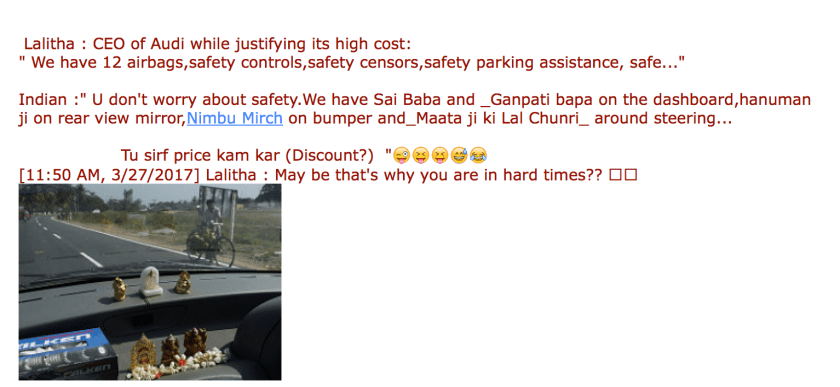
PS: I leave you with WHATSAPP Msg My wife sent me !! That shows Reality of Safety professionals in INDIA!! Sad reality, but can’t have any other views!!! can you???? I have many times heard from my overseas friends on why Indians harp so much only on costs?
I have uploaded YouTube video on Responsible Care®, a voluntary ESH excellence program for chemical industry linking operational aspects to business excellence with community engagement besides focusing on Security post 9/11 scenario. This YouTube presentation, my 8th in State of ESH nation-INDIA, survey, has cross refered to my other presentations, I have posted before. I would list all of my presentations done so far at the bottom of the blog post.
As I was preparing the slides for this presentation, flash news came of President Trump’s executive order to roll back many Sustainability, Green House emissions besides giving a free run to coal plants. This will practically nullify efforts made over last 7-8 years and committment reached in Paris conference in 2015 for tackling global warming. This stroke of pen may as well dump President Obama’s efforts out of window. It would be interesting to see how the world reacts as things go forward as well as how coal industry would survive in cut throat competition of low-priced Renewables, Gas etc. I also recollect David Cameron saying UK-HSE is an albatross around Industry’s neck and excessive safety culture is killing the Industrial growth.
The only positive consolation, if any(?), in country like India, our lawmakers are not bothered about such efforts of turnaround, cutting across party lines, one way or the other and a corrupt ESH bureaucracy, so it will be business as usual for folks here. I can’t recollect single meaningful legislation since Chapter IVA of Factories Act which has made an impact on Industry in India over the last 20 years of my career. The legislations lack precision as well lacks the bite and penalties are pittance that in a cost benefit analysis, paying such fines are far beneficial to companies than reach out and carry out mandated improvements. Incident investigations are forgotten even to be completed let along lessons learnt.So in a sense, it is heartening to see China leading all out efforts to be a leader in Renewable energy and clean up act, although it is a long hard march ahead considering the mess to clean up.
In an uncertain times, the Industries need to hold their own and do business as usual on the journey towards operational excellence. Politicians will come and go, policies will sail or sink, legislative overreach may be HIGH or LOW, companies and their leaders need to see what works for their best interest and put a strategy, plans in place to enhance triple bottom line ( Equity, Environment, Employee) and go about the same. They need to stick to “That’s the way it is” in beating the competition and create a winning environment for themselves by embracing Business enablers and work on norms beyond Regulatory compliance. As the saying goes, Tough times don’t last, tough people do! Such entities see opportunity in any adverse situation execute plans to work a way out and business as usual over medium term.
In this connection of working in an uncertain environment, I read an excellent article at EHS journal which I reproduce below which resonated with what I was working yesterday on RC. This article is by Scott Nadler. I am reproducing this below for folks who receive my blog in email and who dont have easy web access.
It’s less clear what US-based companies intend to do. Will they stay the course, following through on their own promises (made in sustainability reports and elsewhere)? Will they gut their EHS and sustainability programs, taking Administration policy as a signal of a very different “license to operate?” Will skeptical executives shut down sustainability activities they previously tolerated as a sop to stakeholders? Will they step up to help fill the leadership vacuum created by the public sector? Or will they hesitate and hedge, waiting to see which way the politics go?
If you have responsibility for your company’s sustainability/EHS (S/EHS) strategy, you can’t afford to wait. It’s important to review your approach now and see if it’s still “fit for purpose” in this changed and challenging context. Failing to do so risks losing momentum on key policies and programs or, worse, handing control over to those seeking to exploit the Administration’s signals.
Your review needs to take a new form, though. Repeating old “materiality” exercises and asking the same stakeholders the same questions won’t produce fresh perspective. Focusing only on “what’s changing now” will make your head hurt and make you over-react to short-term signals. Instead, asking three blunt questions can give you that needed fresh view.
Key Questions
Ask key internal leaders in a facilitated session if you can; ask yourself in the dead of night with a blank legal pad if you must. But ask.
What is Enduring?
Start with what lasts, not with what is in flux. What part of your S/EHS promises, policies, and programs represent enduring beliefs and commitments?
Some of what’s enduring may be central to your company’s value. What parts of your brand, core markets, or long-term strategy depend on your visibility or credibility around certain issues? What parts of your long-term capital expenditure are based on facing the reality of post-peak coal, disaggregated energy production, or changing urban development and transportation?
When you combine values and value, are there issues that have to be part of your company’s on-going commitment? That commitment might be around any EHS or sustainability issue: climate change, sea level rise, fair trade, supplier social performance, gender rights, or any one of a hundred different issues.
What matters is that these commitments are your foundation. Regardless of current politics, if these are truly enduring commitments then the priority is to remind everyone of that, renew the consensus on what those are, and make sure they remain intact.
What is Emerging?
Building on these enduring issues, you can move to the second question: What are the emerging S/EHS issues that create opportunities or risks to your business?
Look forward, not backward. What are the issues that are starting to emerge that you need to pay attention to (regardless of how they arise)? Inequality and economic opportunity here in the US may be one of those issues, even if you don’t like the way those issues were handled in the recent election. No one is pushing your company to do anything about this now. But is it something you should begin to pay attention to and prepare for?
Similarly, investor attention to your S/EHS performance may be growing. For years, we’ve heard investor pressure discussed without seeing long-term systematic pressure from the investors themselves. That may be starting to change – and while it may be exacerbated by declining faith in government action (or fears of negative government action), the generational shift in investing may be starting to stick. As Morgan Stanley just noted:
…86 percent of Millennials — broadly defined as those born between the early 1980s and 2000 — say they are interested in socially responsible investing. Millennials are also twice as likely to invest in a stock or a fund if social responsibility is part of the value-creation thesis.
That might seem like the same vague view of a distant future — except now Morgan Stanley is starting to put its money (okay, your money) where its mouth is:
… [M]ost sustainable investing opportunities are perceived to cater to individuals with significant wealth, while Millennials are still early in earning years. In response, Morgan Stanley is launching the Impact Access Model Portfolios to provide access to diversified investments with reduced account minimums.
Is your company ready?
What is Expedient?
Once you’ve focused on the enduring and emerging, then it’s time to ask: What are the short-term actions, statements, or silences that may be expedient in the current political climate?
There’s nothing wrong with paying attention to short term opportunities and threats. In fact, you’re ignoring your fiduciary responsibilities if you don’t consider them. Regulatory requirements or roadblocks may be dropping. Tax regulations or other costs may be shifting. Political favor is certainly being dispensed (or withheld) based on different criteria than in the past, rewarding or punishing companies seen as following the Administration’s agenda. At the same time, media, NGO, and investor (or at least analyst) attention may be shifting in different directions, including punishing companies for following the Administration’s agenda.
All of those things may be relevant to your company’s S/EHS approaches. They may create legitimate short-term opportunities for investment and grabbing market share. They may create short-term risks that argue for moving a little more slowly or speaking out a little more softly.
The key is that these expediencies all look different if you’ve already updated your strategies for what is enduring and emerging. What is left, what may be expedient, is only at the margin. For example, if you’ve reaffirmed that your long-term strategy is based on adjusting to the long-term decline in coal, then you are much less likely to be swayed by short-term cheerleading about ephemeral reversals in coal’s fortunes.
Ask, Listen, Act
The answers to these three questions will vary by company, of course. Listen to what the people in your company really say. Don’t assume they all agree with you. Don’t avoid the tough answers.
Your actions need to be based on those answers, but you are probably going to want to:
Reaffirm the enduring issues and make sure senior management remembers and understands why those are important for your value, values or both
Explore the emerging issues and make sure the relevant business leaders are aware of them.
Expand and update your external network (and bring those changes into your materiality exercises) to help you assess and prepare for the emerging issues
The challenge is to find the right balance. Between the panic and the paralysis of daily headlines there is a point of calm, focused progress. Help your colleagues and company calm down about the expedient issues, capture opportunities and prepare for risks. Above all, don’t let your company over-react – and jeopardize its enduring value and values.
I had sent out a Thank you note to INDIAN ESH Folks on reaching close to 3000 Connections, on LinkedIn. I am not very active over the last 2 years there but keep it up to date and spruced up. I thought it is a good way to get in touch with folks with whom I have connected over last 10 years. ( I joined LinkedIN, a very far different, meaningful social platform then). Imagine my surprise, within minutes, my email INBOX was below screenshot. The Email was sent to 410 ESH Folks based out of India.
I was wondering, if the contact email is defunct, in a BUSINESS portal through which recruiters try to reach you, job opportunities potential exist and try to communicate, but can’t?! What is the behaviour ESH folks exhibit? Please ensure your profile info, contact are up to date. Always refer personal email account to your social platform pages so that email is not incommunicado if you leave your job. I was puzzled to see Work Email address in contacts when I sent out the message. Also few people have more than 3 LinkedIn Profile with various email address. This can cause confusion in recruiters unless profile are mirror image (Which is less likely) I can list many instances where guys got better career opportunities through portals like LinkedIn, discussions through professional Forum etc.
Also, when you apply for a new job, first thing company check is your LinkedIn profile for your background, educational credentials, with whom you are connected as well as any references people give about you or you post references about your colleagues. Please keep them up to date. If you are not on any social media platforms in 2017, companies would consider you an unknown entity and may wonder what is that you are hiding? Organisations always prefer a known devil to an unknown angel. While I am not suggesting or meaning in any way that you have to be hyperactive in Linkedin, Google+, Facebook or Twitter or equivalent, a bare minimum presence with up to date information would go a long way for opinion makers to know you better.
2) I can’t list the instances of where Indian ESH folks call me over phone or send me an urgent email, asking me to respond immediately on ESH procedure, data, rules etc etc. When I send them across, I havent got back one “THANK YOU” call / note!! While saying Thank you is never part of an Indian culture, as far as I know, (More Indians think doing favor to them is other guy’s privilege and duty. I have stood for 20 min in 6000 employee cafeteria and watched how many say thank you to the guy who serve them food, coffee. Not even 1 in 10 do that!!) In fact my American Indian friends do say that to me with deep regret that getting thank you from an Indian in India is rarer than finding a white Crow. So when I send across things on my own, I don’t even expect any response, comments. Just do what you do, dont expect rewards like Bhaghavad Githa Says.
3) I am also puzzled at the open sharing of Copyright materials in public domain especiallyStandards, Codes etc for professional use / as a work enabler. The institutions, owners of such intellectual property have poured their sweat and blood for that to materialize and would expect monetization on that. To expect everything free would do them a great disservice and pennywise, pound foolish as the saying goes. I compare that to buying free/fake medicines to treat yourself! With Copyright norms getting stricter and global hunt and crackdown, one don’t want to get caught in these aspects and bring disrepute to oneself and their entity. Remember, your organisation is liable for all your activities if such activities are done on your workplace devices.
In these technological, global connect age,one needs to be current, up to date besides developing soft skills that are norm. As the saying goes “When wealth is lost,nothing is lost. When health is lost, something is lost. When character is lost, everything is lost. In these modern-day environment, charecter is all about soft skills,social profile, social etiquette. Remember you may do 1000 good deeds, one bad deed can destroy whatever reputation you built over years. inoculate yourself well against such situations.
Regards
Karthik.
28/3/17 1530 Hrs.
PS :1) I wish somebody was around in 1985-90 to coach/guide us, wonder how different it would have been. We learned and came up the hard way! Wish folks of this generation in this modern tech age dont have to undergo that ordeal.! Hence this post!! Nothing more, nothing less!! One of my site manager, (1990s) in his 60s, used to chide us,”We lived our lives the way we wanted, just waiting for almighty call, you folks have loooooooong road ahead”!!!
2) My last post on Soft Skills for a while as I dont want this to be hijacked as Evil-HR-Blog!
The Month of March had its major share of Industrial Disasters which made the world take notice and work course correction as to how such process Industries are run safely without unnecessary loss of lives and damage to environment.
Three Mile Island, Radio active near miss; March 28,1979, I recollect the havoc caused in print media and Radio news!! ( I was in School, packing bags for Holiday travel)
Exon Valdez, Major oil Spill, March 24,1989, Causing untold environmental disaster to flora/fauna as well as health hazard to 10,000 folks who handled the situation. Deep Water horizon took over later as largest spill.
Triangle Shirtwaist Factory Fire, March 1911, New York City, 146 workers killed mostly Woman in Garment factory. This incident lead to better working condition for woman in USA and some work place safety norms improved.
Industrial explosions and disasters occur every other month and take its toll. Bhopal happened in December, Piper Alpha in July, Chernobyl in April, BASF, Ludwigshafen explosion in September, etc. In India they are common and occurs every other month and data is never known nor reported. So it would be difficult to put a tally to lives lost as well as property loss/damage.
So when you are in Process Industry, handling hazardous materials thus incidents with serious consequences are part and parcel of the system. One may wonder,What is that best in class organisations do to stay away from having such events and create a safer and productive work place.
“IF YOU THINK SAFETY IS COSTLY, TRY HAVING A CATASTROPHIC ACCIDENT- Trevor Kletz! The Answers that how they do well, are as below from my personal experience.
Leadership: It requires a great leadership to manage QESH with a concept of Safety adds value to business and if it doesn’t add value, don’t do it. Business Leaders set expectations, empower ESH Folks, and track them through Critical metrics and DEMAND progress on the same. No News is BAD NEWS. Metrics covers Safety, Environment status, Process Safety validation, Behavioural & Conditions monitoring, Special Audits (Viz, Rotary part, Static Electricity Hazard, Horizontal deployment of learning from Global Incidents etc). Great leaders make people around them SWEAT!!! True leaders establish trust in the Environment / community in which they operate through dialogue, Transparency, Lead initiatives.
Chart depicting the leadership style of transformational leaders
Risk Assessment:– Manage Risk through team participation covering all aspects. Risk covered from Design stage through Exhaustive process safety review. Spread the spectrum covering Frequency, Severity, Probability, % people exposed as minimum parameters to consider so that risks are spread apart to know the significance and implement the risk mitigation measures as appropriate. Site/Business/Contry Risk Portfolio are worked annually and escalated as required to parent organisation. No Surprises!
Right People for the right job with skills enhancement. Post training, awareness, communication and implementing procedures arising out of risk assessment (residual risks) people are empowered to report abnormal, non standard situations without fear or reprimand. The culture of questioning attitude is encouraged. If it doesn’t make sense, Dont ever attempt it.
Highest standard of Asset Integrity, no compromise on norms to meet Preventive maintenance, Tests, calibration. (CLAIR) No deviations allowed,what so ever. Hire top-notch engineers with proven experience such as those who managed ships in DEEP SEA with no support for 1000s of miles, to carry out safe keeping of High explosive,High hazardous process maintenance with tons of resources with duly approved budget justified from ZERO Based Budgeting. Corrective actions are closed on time, on budget with overdue items escalated UP in the chain as per protocols established, to seek support/funding.
Establish programs and infrastructure that go far beyond the basic legal compliance. An example was Local law for fire fighting water required is 3 Hrs with 350Cub met water. Global bench mark is 8 hrs of fire fighting with 1500 Cub Met Water. Implement the same considering the risk involved. If a Toll manufacturing, III party facility that handles highly fish toxic pesticides is 200 meter from a Drinking water canal, establish measures such as Tertiary containment and impervious flooring to ensure no ground contamination can ever happen.
Contractor validation of highest order with very clear expectations, skill sets,work norms and tools and tackles specifications established such that it is difficult for Tom, Dick, Harry et all, to get in meeting all the norms. Once IN, it is very tough to get out unless Integrity issue is the question. Contractor/Suppliers are treated as “LABOR PARTNERS” and due protocols are established and implemented.
Establish and implement Management Systems that go beyond the usual ISO Norms. Work the Charter Alignment to implement them so that business divisions sign off and don’t come out with an excuse not to implement, citing funding issues.Embrace voluntary charter programs like Responsible Care or equivalent, Green House gas emissions reductions (These add value to business-bottom line) Energy management systems standards.
Embrace audits, assessment, inspections as a routine event and make them happen like a Mundane, Non Sexy, Non Christmas program. Set internal norms / benchmarks to self assessment so as to “UNDER PROMISE – OVER DELIVER”. Audits, inspections are so much aligned to a metric that irrespective any person doing with varied degree of auditing traits, the final outcome are within range of acceptable deviation. Make people succeed by standardizing every process/program/procedure. Distil out the variations. Fit people to the job; enhance right brainers.
Every Incident is analysed as opportunity for rapid problem solving covering 5WHY and 6M (Man, Method, Machine, Material, Mileu, Management) Every incident has potential for a rapid problem solving for working the causes from
Avoidance of Hazard.
prevention of such incidents
Management System failure. In such organisations 1) HUMAN Error is never accepted as an Incident cause as it is = saying person fell due to Earth’s Gravity or as 2) conclusion “Negligence as a cause”.(No one comes to work to get killed)
Non Negotiable Management of Change Program. Changes cover Process, People, Procedures, Temporary, permanent, Emergency nature. Change requests need to be completed within 48 Hrs thus establishing a sense of Urgency. Since folks are competent/skilled, absence of personnel is not an issue! Some one who is delegated down steps in to complete the deadline.
11. Despite working all the systems, programs, people, procedures, policy etc. things can still go out of hand and emergency situations like fire, spill, toxic gas release, medical emergency, off site emergency, can still happen. But with the foresight of sound risk assessments in place, great organisations have a hands on Emergency response plans in place with adequate resources provided to manage & overcome the situation. As Emergency situations are practiced through Drills/exercises, people work the same in the same “ROUTINE TEMPO” bringing in the extra skills needed to handle such situation.
As I had indicated in my previous posts/presentations, It all boils down to knowing -Doing GAP and how the gap that is null makes you reach excellence in safety performance. This is done, despite hazardous materials and process that can cause an adverse situations.







 Few weeks down the line everything goes quiet and program falls through the rails or we find clients totally not ready. Why??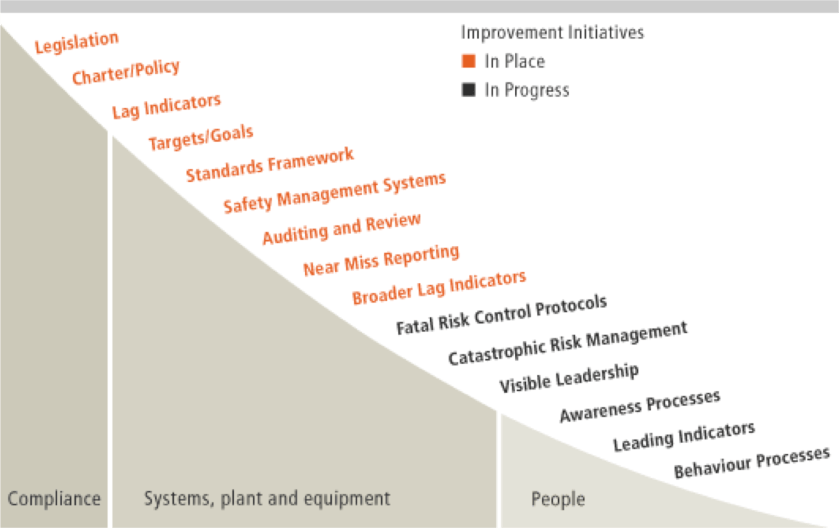


 It was due to a pin hole through which steam seeped in and causing explosion of the RM storage tank which was getting heated. The global project contractor has installed Ten such installations all over the world, until then, without even a PIN PRICK to an employee!
  You may wonder what is that, Ex-White House Chief of Staff, Former Secretary of State, and Treasury Secretary who served Three American Presidents, (Ford, Reagan, Bush Sr.)has to do with Safety….!!!!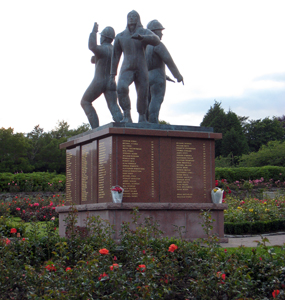









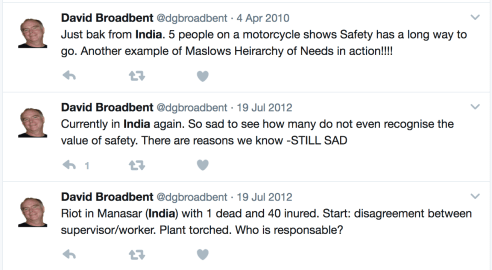
 So in a sense, it is heartening to see





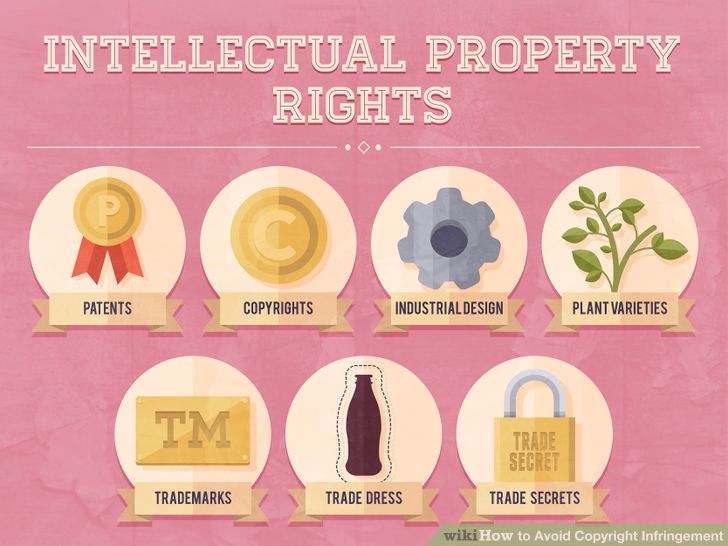 3) I am also puzzled at the open sharing of Copyright materials in public domain especially Standards, Codes etc for professional use / as a work enabler. The institutions, owners of such intellectual property have poured their sweat and blood for that to materialize and would expect monetization on that. To expect everything free would do them a great disservice and pennywise, pound foolish as the saying goes. I compare that to buying free/fake medicines to treat yourself! With Copyright norms getting stricter and global hunt and crackdown, one don’t want to get caught in these aspects and bring disrepute to oneself and their entity. Remember, your organisation


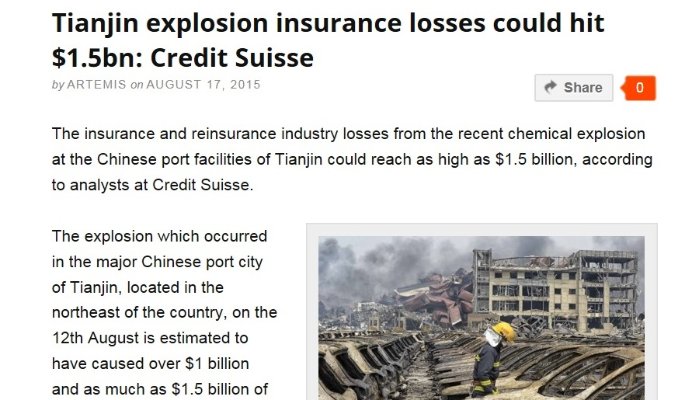 The Answers that how they do well, are as below from my personal experience.


 An example was Local law for fire fighting water required is 3 Hrs with 350Cub met water. Global bench mark is 8 hrs of fire fighting with 1500 Cub Met Water. Implement the same considering the risk involved. If a Toll manufacturing, III party facility that handles highly fish toxic pesticides is 200 meter from a Drinking water canal, establish measures such as Tertiary containment and impervious flooring to ensure no ground contamination can ever happen.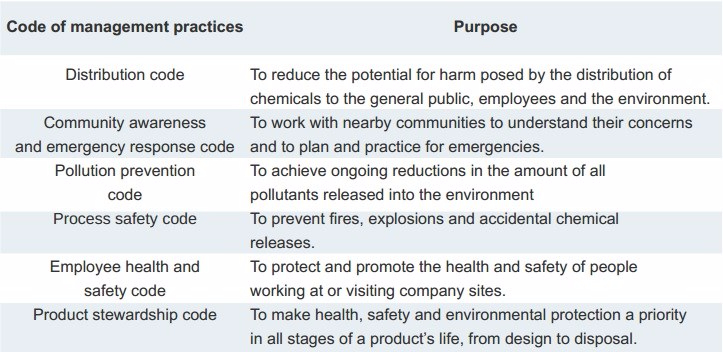
 Fit people to the job;


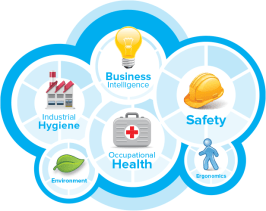
 Health, Environment, Safety, Sustainability (HESS)